New Delhi: In a first-of-its-kind initiative, the Delhi Police has organised a dedicated capacity-building workshop to sensitise its officers on the enforcement challenges surrounding vaping and other new-age nicotine delivery devices, which continue to proliferate despite a nationwide ban.
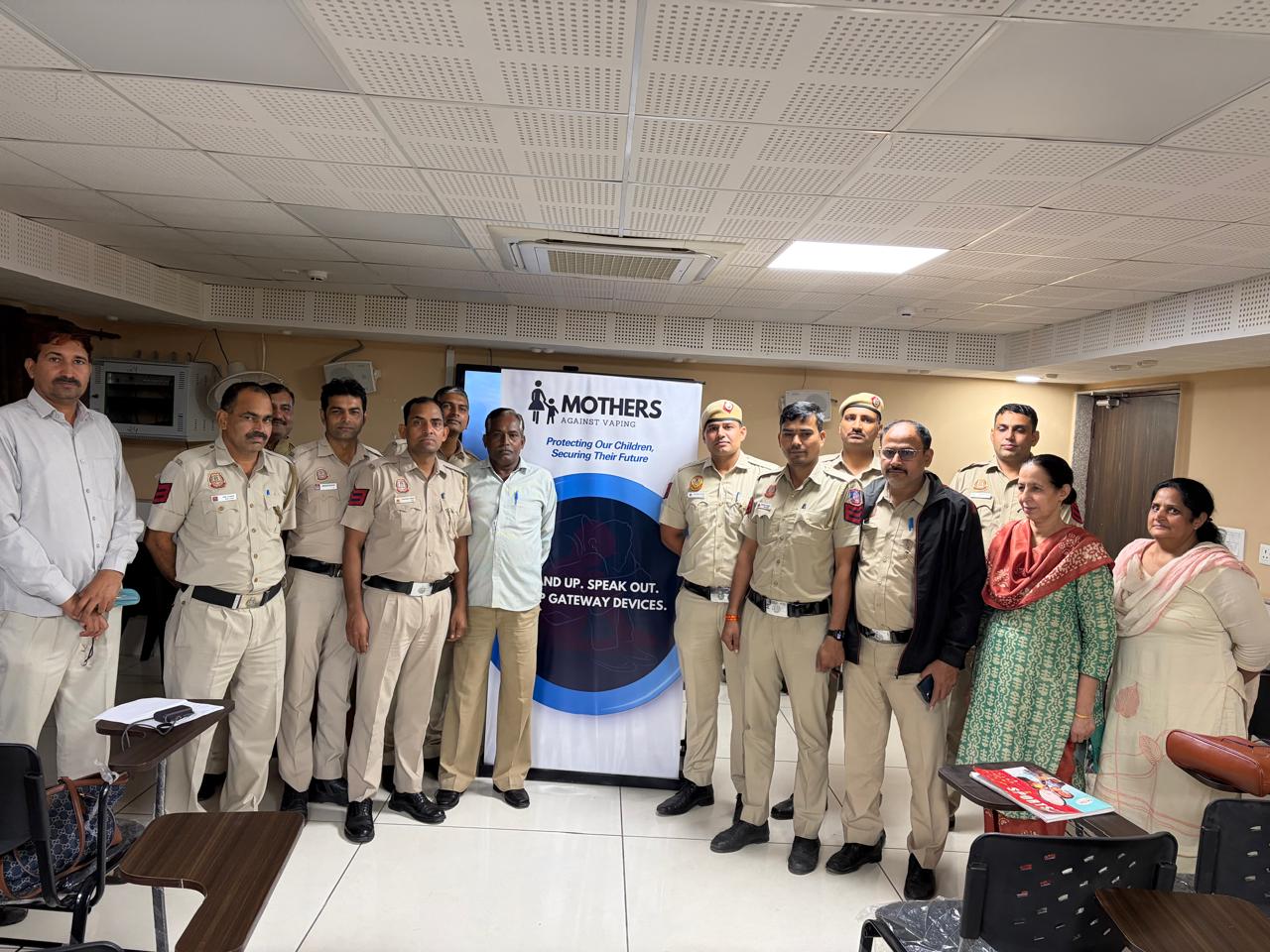
The session, titled “Enforcement in the Digital Age: Tackling the Vape Culture Among Youth,” was held at the Delhi Police Academy, Rajinder Nagar, in collaboration with the citizen-led group Mothers Against Vaping (MAV). The workshop saw participation from officers across ranks, from Head Constables to Inspectors.
The programme sought to strengthen officers’ understanding of the Prohibition of Electronic Cigarettes Act (PECA), 2019, and address issues such as online smuggling, disguised advertising, and digital marketing of e-cigarettes and nicotine pouches. Officials were briefed on the rising trend of youth addiction linked to nicotine pouches and gums — products often marketed as harmless but identified as emerging gateways to nicotine dependence.
Delivering a session during the workshop, Dr. Rajesh Gupta, Director and Head of Respiratory Medicine and Interventional Pulmonology at Yashoda Medicity, warned of the hidden risks behind these products. “Today’s youth are drawn to sleek, flavoured devices that appear harmless. These products often contain toxic chemicals such as diacetyl and formaldehyde that permanently damage the lungs. It is a silent epidemic disguised in flavour,” he said.
Health experts at the event highlighted that several flavoured e-liquids used in such devices contain chemicals like diacetyl and acetyl propionyl, linked to “popcorn lung,” a condition that causes irreversible scarring of airways. According to the CPCB and medical professionals, users may also inhale a mix of harmful compounds, including formaldehyde, acrolein, heavy metals, and other toxic substances.
While PECA, 2019, imposes a comprehensive ban on the production, sale, import, export, transport, storage, and advertisement of e-cigarettes in India, enforcement agencies continue to face challenges as these devices remain accessible through informal channels, particularly among schoolchildren and young adults.
Under the Act, possession and storage are punishable offences, with penalties ranging from imprisonment of up to one year or a fine of ₹1 lakh for first-time offenders to a maximum of three years or ₹5 lakh for repeat offences.
Asif Mohd Ali, IPS, Joint Director, Delhi Police Academy, said the growing use of digital platforms for marketing and distribution poses significant enforcement hurdles. “The ban on such products is unambiguous, but the challenge lies in their online and courier-based circulation. It is essential that our personnel remain updated on these emerging threats,” he said. “Mothers Against Vaping has been doing commendable work in raising awareness, and this collaboration provided valuable insight into the scale of the problem.”
Manvi Gupta, Co-founder of Parwarish and a certified child counsellor, underscored the need for coordinated efforts among parents, educators, and enforcement agencies. “Parenting today means protecting children from constant digital and social temptations. Vapes and nicotine pouches are often marketed as lifestyle accessories but pose far greater health risks than cigarettes,” she said, urging officers to enforce the law firmly yet empathetically.
The workshop also traced the illicit supply chain of these devices. Most products are sourced from China and Southeast Asia, entering India through misdeclared cargo, courier consignments, or hand carriage. Large shipments are divided into smaller batches and circulated through informal networks, online marketplaces, and social media channels such as Instagram, Telegram, and WhatsApp. Payments are typically made via UPI or cash on delivery.
Experts further cautioned that vapes can be adapted to deliver substances beyond nicotine, including marijuana oils (THC) and synthetic drugs — a trend already reported in schools abroad. This, they warned, underscores the urgency of preventing such products from reaching young users in India.
The workshop concluded with a call for stronger coordination among law enforcement, educational institutions, and civil society to curb the spread of vaping and protect adolescents from emerging forms of substance abuse.