New Delhi: Seeking to widen the country’s pharmacovigilance footprint into the North-East, the Indian Pharmacopoeia Commission (IPC) has entered into three Memoranda of Understanding (MoUs) with the Nagaland Medical Council, Nagaland State Drugs Control Administration (NSDCA), and the Nagaland State Pharmacy Council.
The agreements are expected to enhance monitoring of adverse drug reactions and medical device-related events, support the expansion of ADR reporting centres, and promote safer medication use through the National Formulary of India (NFI) across healthcare institutions in the State.
Notably, the pact with the Nagaland Medical Council is the first collaboration of its kind with any State Medical Council, enabling pharmacovigilance and materiovigilance interventions to extend down to primary health centres.
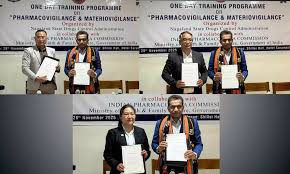
Signed during a day-long training session on drug and device safety held in Kohima, the MoUs aim to increase access to Indian Pharmacopoeia Reference Substances, strengthen drug quality testing, and help build technical capacity among healthcare stakeholders.
The documents were formalised by Dr. V. Kalaiselvan, Secretary-cum-Scientific Director, IPC; Dr. Kevilhulie Meyase, Registrar, Nagaland Medical Council; Imlilila, Assistant Drugs Controller, NSDCA; and Khele Thorie, Registrar, Nagaland State Pharmacy Council, in the presence of senior functionaries from all three bodies.
The NSDCA agreement marks IPC’s second partnership of this nature after UPFDA, and the first in the North-East region. Meanwhile, the association with the State Pharmacy Council makes Nagaland the fourth pharmacy council in India to collaborate with the Commission.
Under the initiative, training programmes on quality assurance and safety reporting will be rolled out for physicians, pharmacists, nurses, and technical personnel. Wider integration of the NFI, annual observance of National Pharmacovigilance Week, and establishment of ADR and medical-device monitoring units form key components of the plan.
The IPC will extend scientific and regulatory support, while the State agencies will collaborate with hospitals, medical colleges, pharmacists, drug inspectors and private healthcare facilities for on-ground implementation.