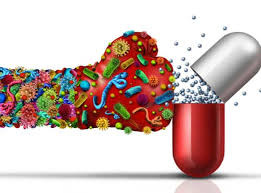
New Delhi: Antibiotic resistance is accelerating at a rate that global health agencies now describe as deeply worrying. Current estimates indicate that one in six bacterial infections no longer responds to first-line antibiotics, and resistance has risen across more than 40 per cent of bacteria–drug combinations since 2018.
Amid this mounting crisis, a new study from the Indian Institute of Technology (IIT) Bombay has sounded another alarm. Researchers have found that Mycobacterium tuberculosis—the pathogen responsible for the world’s deadliest infectious disease—may be deploying a previously under-recognised survival tactic that enables it to endure antibiotic exposure by reinforcing its outer fat-rich membrane.
Published in Chemical Science, the study reveals that the bacteria’s growing tolerance to antibiotics is not merely a result of genetic mutations, which have traditionally been considered the main driver of TB drug resistance. Instead, the pathogen appears to alter the structure and stiffness of its outer membrane—composed primarily of lipids—particularly when it enters a dormant, slow-growing phase resembling latent TB infection affecting millions globally.
To investigate this phenomenon, the team grew TB bacteria in both an active, rapidly dividing state and a dormant state. When the bacteria were exposed to four commonly used TB drugs—rifabutin, moxifloxacin, amikacin and clarithromycin—the dormant cells required drug concentrations two to ten times higher than active cells to inhibit half their growth.
“In practical terms, a drug that works effectively in the early phase of disease becomes markedly less potent once the bacteria shift into dormancy,” said Prof. Shobhna Kapoor of IIT-B’s Department of Chemistry. “Importantly, this reduced response is not tied to the genetic mutations we typically associate with antibiotic resistance.”
Membrane analysis revealed striking differences between active and dormant cells. More than 270 distinct lipid molecules were identified, with active cells displaying loose, fluid membranes that allowed drugs to pass through. In contrast, dormant bacteria formed tightly packed, rigid membranes—essentially creating a defensive shield that obstructs antibiotic entry.
This armour-like outer coating significantly limits drug penetration. While rifabutin could readily enter active bacteria, it struggled to cross the rigid membranes of dormant cells. “The strengthened outer layer becomes the bacterium’s first and strongest line of defence,” Prof. Kapoor noted.
The findings point to a troubling new scenario: TB bacteria may be able to temporarily resist antibiotics through physical membrane changes alone, without acquiring permanent genetic mutations. This raises concerns that current treatment regimens—already long and complex—may be far less effective in cases involving latent or slow-progressing infection.
However, the researchers also identified a potential path forward. Weakening or loosening the rigid membrane could restore the potency of existing drugs, even older ones. “Combining an antibiotic with a molecule that disrupts the outer membrane can make the bacteria sensitive again,” Prof. Kapoor said. “Crucially, this method does not provide the bacteria an opportunity to develop long-term genetic resistance.”
The study comes at a pivotal moment. Despite advances in diagnostics and treatment, TB continues to cause staggering loss of life. In 2024, an estimated 10.7 million people developed the disease and 1.23 million died globally. India remains the worst-affected country, recording more than 2.71 million cases last year.
The IIT Bombay findings underscore the urgent need to reassess TB treatment strategies, particularly as the pathogen appears to be adopting new, non-genetic mechanisms to withstand antibiotic attack. Public-health experts warn that without swift action, the world risks sliding into an era where TB strains become increasingly difficult to treat, endangering decades of progress in controlling the disease.
The World Health Organisation Global Tuberculosis Report 2025 has noted that TB continues to be among the world’s deadliest infectious diseases, claiming over 1.2 million lives and affecting 10.7 million people globally in 2024.
According to the report, 87% of the world’s TB cases are concentrated in just 30 countries, with India (25%) leading the list, followed by Indonesia (10%), the Philippines (6.8%), China (6.5%), and Pakistan (6.3%).
As per the Union Health Ministry, India’s treatment coverage now stands at 92%, outpacing most high-burden countries.
For any query/info kindly mail indiahealthbuddy@gmail.com
#IIT-B #Study #TBBacteria #Drug #WHO