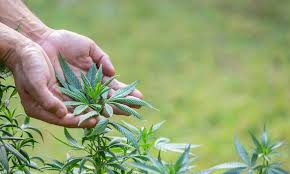
Shimla: The Himachal Pradesh government has unveiled an ambitious plan to transform cannabis from a long-stigmatised “wild weed” into a regulated industrial and medicinal crop, projecting annual revenues of up to ₹2,000 crore while creating new livelihood opportunities for farmers and youth. Chief Minister Sukhvinder Singh Sukhu 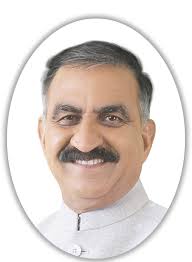 announcing the initiative, said the state’s “Green to Gold” vision aims to make Himachal Pradesh self-reliant by 2027 and dismantle the illicit drug economy. Cannabis that has grown wild for decades in valleys such as Kullu, Mandi and Chamba will now be repositioned as a legitimate industrial resource, he said in a press release.
The policy allows controlled cultivation of industrial hemp, strictly regulated to ensure non-intoxicating use. Sukhu clarified that all hemp grown in the state must contain less than 0.3 per cent Tetra Hydro Cannabinol (THC).
“This scientific threshold ensures the crop is unsuitable for misuse, while retaining its superior fibre and seed quality,” the Chief Minister said.
The Cabinet cleared a pilot project for regulated cultivation on January 24, 2025. Once expanded, the government estimates the initiative could contribute ₹1,000 crore to over ₹2,000 crore annually to the state exchequer.
Industrial hemp will be used for a wide range of applications, including medicinal products for pain management and inflammation, textiles and apparel, paper and packaging, cosmetics and personal care products, and biofuel and energy solutions.
The move is also expected to offer farmers an alternative to traditional crops that are increasingly being abandoned due to wildlife damage, particularly by monkeys, officials said.
Highlighting hemp’s environmental benefits, the government noted that the crop requires nearly 50 per cent less water than cotton and can grow in marginal soils, making it suitable for Himachal’s terrain. To support farmers, Chaudhary Sarwan Kumar Himachal Pradesh Krishi Vishvavidyalaya, Palampur, and Dr YS Parmar University of Horticulture and Forestry, Nauni, are conducting pilot studies to develop high-yield, low-THC seed varieties tailored to Himalayan conditions.
Revenue Minister Jagat Singh Negi, who chaired the state-level committee on the issue, said the panel studied regulated cannabis cultivation models in Uttarakhand and Madhya Pradesh before submitting its recommendations. The report was tabled and accepted in the Assembly, backing controlled cultivation for industrial, scientific and medicinal purposes.
Outlining the long-term roadmap, Sukhu said the proposed “Hemp Hub” would position Himachal Pradesh as a manufacturing centre for hemp-based products, including specialised textiles, packaging, cosmetics, biofuels, Ayurvedic medicines and hempcrete, a carbon-negative construction material.
The ecosystem, he added, could spur startups, generate youth employment and help make Himachal Pradesh “the most prosperous state by 2032.”
Reiterating the government’s stance, the Chief Minister stressed that the policy is “not about promoting addiction but about building a modern, eco-friendly industry”, ensuring the state’s natural resources benefit farmers and the public exchequer rather than illicit networks.
In case of any query kindly mail to indiahealthbuddy@gmail.com
#hemp #economic #plantation #youth #employment