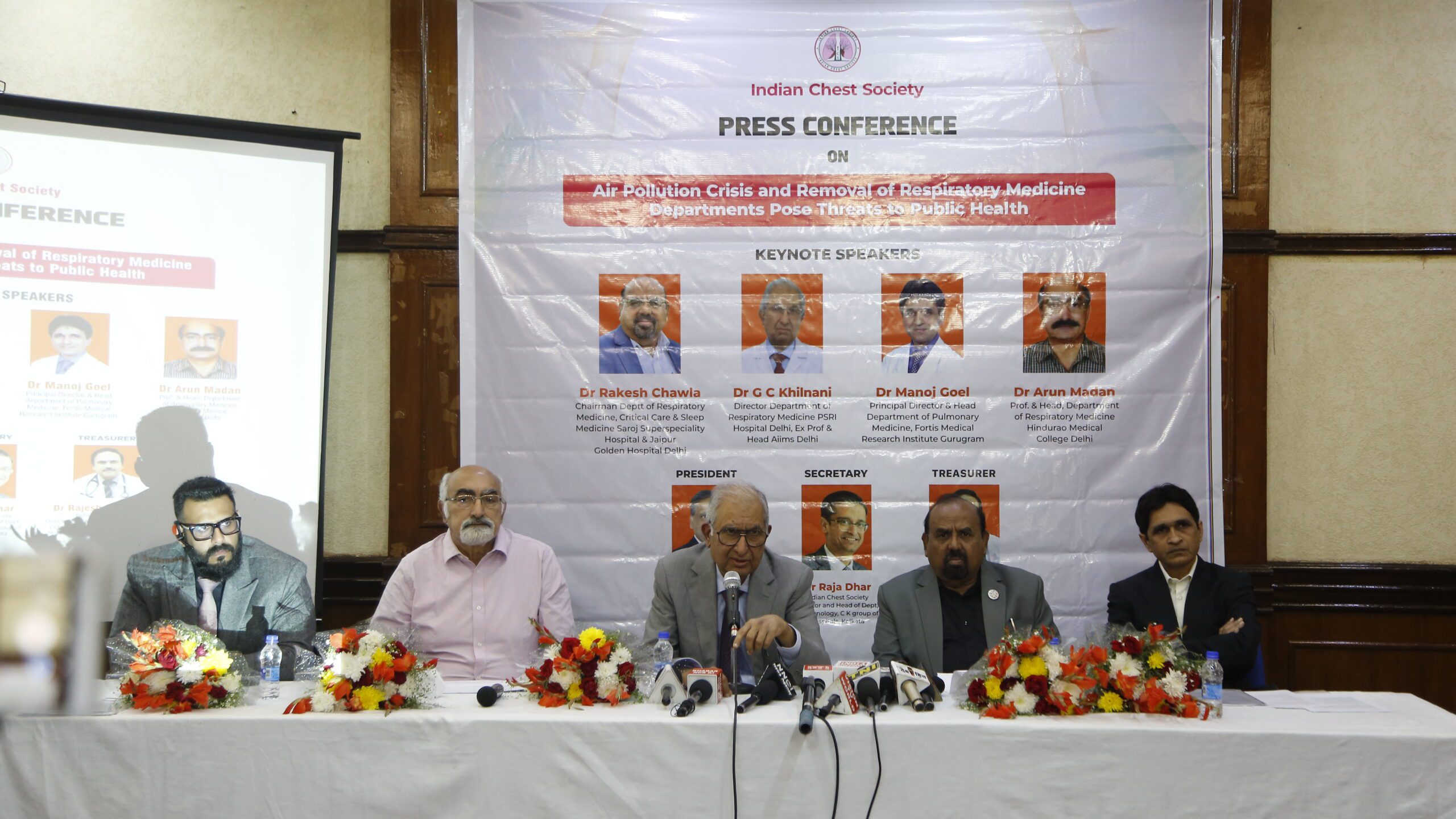
As air pollution worsens and respiratory illnesses soar and India aims to eliminate infectious tuberculosis (TB) by 2025, health experts from the Indian Chest Society (ICS) are sounding the alarm over the National Medical Commission’s (NMC) recent move to remove respiratory medicine from the list of essential departments in undergraduate medical education.
Dr. Rakesh Chawla, Chairman of Respiratory Medicine, Critical Care & Sleep Medicine at Saroj Superspeciality Hospital and Jaipur Golden Hospital in Delhi, and Vice President of the Indian Chest Society, stressed the critical function of Respiratory Medicine departments in medical colleges. “These departments are vital for diagnosing and managing intricate respiratory conditions, supporting public health initiatives, and safeguarding patient care, especially for TB, chronic obstructive pulmonary disease (COPD), and pollution-induced diseases. Removing them risks undermining India’s TB elimination objectives and public health efforts.”
Dr. Chawla emphasised that eliminating these departments limits holistic care and weakens hospitals’ capacity to address broader community health challenges. He also criticised the NMC’s decision for lacking transparency and bypassing necessary parliamentary procedures, urging the Government of India to intervene and prioritize respiratory care amid escalating pollution levels.
Dr. Arun Madan, Professor and Head of Respiratory Medicine at Hindurao Medical College, Delhi, echoed these concerns, lamenting the impact on medical college hospitals, which have long served as vital centers for advanced respiratory care and training. His concerns were further heightened by the NMC’s formalisation of this decision in the “Guidelines for Undergraduate Courses under Establishment of New Medical Institutions, Starting of New Medical Courses, Increase of Seats for Existing Courses & Assessment and Rating Regulations, 2023” (UGMSR 2023 Guidelines), which he argued could hinder the nation’s ability to effectively tackle respiratory health challenges.
Dr. G.C. Khilnani, Director of Respiratory Medicine at PSRI Hospital in Delhi and Chairman of the Indian Chest Society (North Zone), pointed to India’s severe pollution crisis, with over 99% of the population exposed to PM2.5 levels above WHO’s safety thresholds. This dire environmental situation exacerbates respiratory and cardiovascular diseases, with AQI levels above 1,000 significantly affecting vulnerable groups. “The rising demand for healthcare is clear, as more than 50% of healthcare consultations in India address respiratory symptoms, according to The Lancet’s POSEIDON study (2015).” Dr. Khilnani called for stronger respiratory healthcare infrastructure to meet the growing demands driven by pollution.
Dr. Manoj Goel, Principal Director of Pulmonary Medicine at Fortis Medical Research Institute in Gurugram, stressed the importance of policies aimed at reducing air pollution. He advocated for the adoption of clean industrial technologies, expanding renewable energy, improving urban planning, and implementing better waste management systems.
According to the World Health Organization, meeting even the first interim air quality targets could prevent 300,000 deaths annually, underscoring the need for multi-sectoral efforts to address air quality and healthcare.
Dr. Aditya Chawla, Consultant in Respiratory Medicine at Jaipur Golden Hospital and Saroj Super Specialty Hospital, Delhi, advocated for comprehensive air pollution reduction strategies, including the adoption of clean energy and sustainable urban planning. He also emphasized the importance of reinstating Respiratory Medicine as a core department in MBBS education, aligning policies with public health priorities, and bolstering healthcare infrastructure to effectively combat India’s respiratory health crisis.
The medical experts collectively stressed that Respiratory Medicine departments are indispensable in addressing the nation’s escalating respiratory health crisis, exacerbated by air pollution. They have called for urgent action to restore the departments in medical curricula and implement comprehensive measures to reduce pollution’s adverse health impacts.
Experts in the field emphasised that respiratory disorders represent a significant health burden in India. Citing one of the largest nationwide studies conducted in the country, they highlighted that 50% of patients visit a doctor for respiratory issues—25% for acute respiratory infections and another 25% for chronic conditions such as asthma and COPD. “This study underscores the critical need for every MBBS doctor in India to be well-equipped to manage both acute and chronic respiratory diseases. The best way to impart this essential knowledge and skill set is through a dedicated Department of Respiratory Medicine,” the experts stated.
Also, they pointed out that while India has embarked on an ambitious goal of “TB Free India by 2025” spearheaded by Prime Minister Narendra Modi, the TB elimination program will be seriously jeopardized by the policy of NMC of doing away with department of Respiratory Medicine as this policy would result in inadequate workforce essential for the realisation of the dream of TB elimination in the near future.