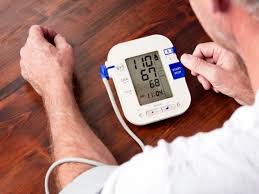
New Delhi: Even when blood pressure is well controlled, older adults whose blood pressure fluctuates widely from one heartbeat to the next may be at greater risk for brain shrinkage and nerve cell injury, according to a new study led by the USC Leonard Davis School of Gerontology.
The study, first published online in the Journal of Alzheimer’s Disease on October 17, reveals that short-term “dynamic instability” in blood pressure — moment-to-moment changes measured over just minutes — is linked to loss of brain tissue in regions critical for memory and cognition, as well as to blood biomarkers of nerve cell damage.
“Our findings show that even when average blood pressure is normal, instability from one heartbeat to the next may place stress on the brain,” said USC Leonard Davis School Professor of Gerontology and Medicine Daniel Nation, senior author of the study. “These moment-to-moment swings appear to be associated with the same kinds of brain changes we see in early neurodegeneration.”
While high average blood pressure has long been known to increase the risk of dementia, this study focuses on blood pressure variability, or how much blood pressure rises and falls over short time periods. Recent evidence suggests that such fluctuations can strain small blood vessels in the brain and reduce their ability to deliver steady blood flow.
In this study, the researchers combined two complementary measures such as average Real Variability (ARV), which captures how much systolic blood pressure (the top number in a blood pressure reading) changes between each heartbeat and Arterial Stiffness Index (ASI), which reflects how flexible or stiff the arteries are as they respond to those changes in pressure.
Together, these measures indicate how much blood flow changes over a short period of time, or what the researchers call “blood pressure dynamic instability.”
“Blood pressure isn’t static; it’s always adapting to the body’s needs,” Nation explained. “But as we age, that regulation can become less precise. This study suggests that excessive fluctuations could be a sign of vascular aging that contributes to brain injury.”
The study included 105 community-dwelling older adults between ages 55 and 89 who were generally healthy and had no major neurological disease. During MRI scans, participants’ blood pressure was monitored continuously using a finger cuff device that recorded every beat for seven minutes. Researchers then analyzed how these fine-scale fluctuations related to brain structure and blood biomarkers linked to neurodegeneration.
MRI scans revealed that participants with both high ARV and high ASI, which indicates unstable pressure and stiff arteries, had smaller hippocampal and entorhinal cortex volumes. These two brain regions are vital for learning and memory and are among the first affected by Alzheimer’s disease. Blood samples showed that the same individuals had higher levels of neurofilament light (NfL), a blood-based marker that rises when nerve cells are damaged.
Importantly, these findings remained significant even after accounting for participants’ age, sex, and average blood pressure, suggesting that fluctuations themselves, not just overall pressure, may be a key risk factor.
In addition, the brain changes appeared more pronounced on the left side, consistent with previous research showing that the left hemisphere may be more vulnerable to vascular stress and neurodegenerative diseases such as Alzheimer’s. The researchers speculate that differences in blood vessel anatomy or blood flow demands between hemispheres might make the left side more susceptible.
The findings open a new window into how cardiovascular changes contribute to cognitive decline and may offer novel prevention strategies.
“Traditionally, we’ve focused on lowering average blood pressure numbers,” said Trevor Lohman, USC research assistant professor of neurology and gerontology and first author of the study. “But this study suggests we should also be looking at how stable blood pressure is from moment to moment. Reducing these fluctuations could help protect the brain, even in people whose average readings look fine.”
Future research will explore whether interventions that stabilize blood pressure, such as tailored medication timing, exercise, or stress reduction, can slow brain aging and reduce dementia risk. The authors also note that because this was a cross-sectional study, it cannot prove cause and effect, necessitating larger, long-term studies that closely examine the links between cardiovascular and brain health.
“Our results underscore how closely connected the heart and brain are,” Lohman said. “Maintaining steady, healthy blood flow could be one of the best ways to support brain health as we age.”
The study, “Blood Pressure Dynamic Instability and Neurodegeneration in Older Adults,” was conducted by researchers from USC, UC Irvine, and UCSF. The research was supported by National Institutes of Health, the American Heart Association, and the Southern California Clinical and Translational Science Institute