• Contcat Us
Friday, April 24, 2026
Health Buddy
No Result
View All Result
  • Login
  • Register
  • Home
  • National
  • Health
  • Environment
  • Business
  • Govt Bulletin
  • Post-COVID Insights
  • Others
    • Disability
    • Cooperative
    • Science/Tech
    • Lifestyle/Culture
  • Home
  • National
  • Health
  • Environment
  • Business
  • Govt Bulletin
  • Post-COVID Insights
  • Others
    • Disability
    • Cooperative
    • Science/Tech
    • Lifestyle/Culture
No Result
View All Result
Morning News
No Result
View All Result

Researchers Identify Potential Blood Markers for Early Detection of Gallbladder Cancer

Alok Uniyal by Alok Uniyal
February 28, 2026
in Health
0
Researchers Identify Potential Blood Markers for Early Detection of Gallbladder Cancer

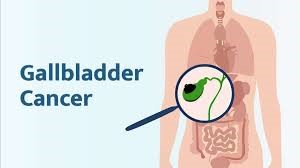
New Delhi: A team of researchers from Tezpur University and University of Illinois Urbana-Champaign has reported promising findings that could pave the way for earlier diagnosis of gallbladder cancer, — a critical need in India, where gallbladder cancer is frequently diagnosed late and carries a poor prognosis.

By analysing chemical changes in patients’ blood, the researchers have identified distinct molecular patterns that may help detect the disease before it reaches advanced stages.

READ ALSO

India Leads Global Surge In AI-Driven Personal Healthcare Use, But Trust Deficit Persists

Extreme Weather Raises Heart Risks for India’s Ageing Population, Warns Study

The study titled “Untargeted serum metabolomics reveals differential signatures in gallstone-associated and gallstone-free gallbladder cancer variants,” is published in the Journal of Proteome Research.

It focuses on identifying variations in small molecules circulating in the bloodstream, using a technique known as metabolomics.

The researchers found that the chemical fingerprints in blood samples could clearly separate cancer patients from those suffering from non-cancerous gallbladder conditions. Notably, the study also distinguished between two subsets of cancer patients — those who had gallstones and those who did not — an important difference because these groups often require varied clinical management.

The work was led by Assistant Professor Pankaj Barah and research scholar Cinmoyee Baruah at Tezpur University, with computational analysis carried out by Amit Rai at the University of Illinois Urbana-Champaign. The team examined blood samples from three categories: patients with gallbladder cancer without gallstones, patients with cancer alongside gallstones, and individuals with gallstones but no evidence of cancer.

Through detailed metabolic profiling, the scientists detected significant alterations in hundreds of small molecules. Approximately 180 metabolites showed abnormal patterns in gallstone-free cancer patients, while around 225 were altered in those who had both cancer and gallstones. Many of these molecules were associated with bile acid metabolism and amino acid pathways, both of which are known to influence tumour development and progression.

By carefully analysing these complex data sets, the researchers were able to identify distinct metabolic signatures linked to each group. They believe these findings could form the basis of a simple blood test that may assist clinicians in identifying gallbladder cancer at an earlier and potentially more treatable stage.

Gallbladder cancer often presents with vague symptoms such as abdominal discomfort or digestive issues, which can delay diagnosis. In India, the disease burden is particularly high in regions such as Assam and across parts of northern and northeastern states. The highest incidence is reported along the Gangetic belt, including Uttar Pradesh, Bihar and West Bengal. The country accounts for nearly 10 per cent of the global caseload.

While the findings are encouraging, the researchers have called for broader studies involving larger and more diverse populations before such diagnostic tools can be adopted in routine clinical practice. Even so, the study marks an important step toward developing non-invasive screening approaches, particularly in high-risk regions where earlier detection could substantially improve survival rates.


Related Posts

India Leads Global Surge In AI-Driven Personal Healthcare Use, But Trust Deficit Persists
Health

India Leads Global Surge In AI-Driven Personal Healthcare Use, But Trust Deficit Persists

April 23, 2026
Extreme Weather Raises Heart Risks for India’s Ageing Population, Warns Study
Environment

Extreme Weather Raises Heart Risks for India’s Ageing Population, Warns Study

April 21, 2026
AIIMS Body Marks Ambedkar Birth Anniversary with Focus on Social Justice & Equality
Exclusive

AIIMS Body Marks Ambedkar Birth Anniversary with Focus on Social Justice & Equality

April 21, 2026
Aahwahan Foundation Unveils Dialysis unit at Vanivilas Hospital to Support High-risk Pregnancies
Health

Aahwahan Foundation Unveils Dialysis unit at Vanivilas Hospital to Support High-risk Pregnancies

April 17, 2026
AI Identifies Early Risk Patterns for Skin Cancer
Health

AI Identifies Early Risk Patterns for Skin Cancer

April 16, 2026
Strong Clinical Grounding Vital Despite Ai Advances, Says Jitendra Singh
Health

Strong Clinical Grounding Vital Despite Ai Advances, Says Jitendra Singh

April 14, 2026
Next Post
In Major Push Against Cervical Cancer, PM Modi to Unveil National HPV Immunisation Drive from Ajmer Today

In Major Push Against Cervical Cancer, PM Modi to Unveil National HPV Immunisation Drive from Ajmer Today

Please login to join discussion

Categories

  • Business
  • Cooperative
  • Culture/Tourism
  • Disability
  • Environment
  • Exclusive
  • Health
  • INFODESK
  • Lifestyle
  • MINDFUL CARE: Nourishing Thoughts and Body
  • National
  • News
  • Politics
  • Post-COVID Insights
  • Science
  • Sports
  • Tech

About

We bring you the best Premium WordPress Themes that perfect for news, magazine, personal blog, etc. Check our landing page for details.

Follow us

Other Links

  • Home
  • About Us
  • Editorial Policy
  • BMI Calculator
  • Calorie Counter

Recent Posts

  • Musical Tribute in Delhi, Varanasi to Honour Pandit Rajan Mishra’s Legacy from Tommorrow
  • India Leads Global Surge In AI-Driven Personal Healthcare Use, But Trust Deficit Persists
  • UP’s Shekha Jheel Bird Sanctuary is India’s 99th Ramsar site
  • Extreme Weather Raises Heart Risks for India’s Ageing Population, Warns Study

Categories

  • Business
  • Cooperative
  • Culture/Tourism
  • Disability
  • Environment
  • Exclusive
  • Health
  • INFODESK
  • Lifestyle
  • MINDFUL CARE: Nourishing Thoughts and Body
  • National
  • News
  • Politics
  • Post-COVID Insights
  • Science
  • Sports
  • Tech
No Result
View All Result
  • Home

© 2025 Essar - Print & IT Solutions Jegtheme.

Welcome Back!

Login to your account below

Forgotten Password? Sign Up

Create New Account!

Fill the forms below to register

All fields are required. Log In

Retrieve your password

Please enter your username or email address to reset your password.

Log In