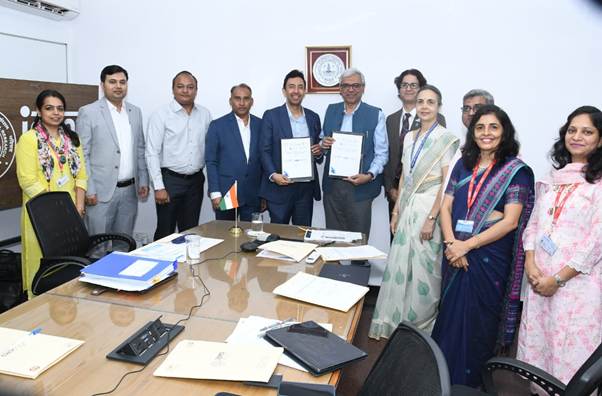
NEW DELHI: In a move aimed at shortening the journey from laboratory research to patient care, the Indian Council of Medical Research (ICMR) has transferred three indigenously developed biomedical technologies to Indian pharmaceutical companies for further development, clinical translation, manufacturing and eventual commercialisation.
The technologies include a novel therapeutic candidate for HPV-related precancerous cervical lesions and two next-generation vaccine platforms against enteric bacterial infections.
Under the licensing agreements facilitated through ICMR’s Medical Innovations Patent Mitra initiative, Emcure Pharmaceuticals has acquired the rights to develop SHetA2, an experimental anti-human papillomavirus (HPV) therapeutic candidate for the treatment of Cervical Intraepithelial Neoplasia (CIN), a precancerous condition that can progress to cervical cancer if left untreated. Biological E Ltd. has obtained licences for two vaccine technologies designed to protect against typhoid, paratyphoid and Shigella infections.
Health experts say the transfer marks an important phase in the innovation pipeline. While research institutions are equipped to discover and validate promising molecules, pharmaceutical companies possess the expertise and infrastructure needed for large-scale manufacturing, advanced clinical development, regulatory approvals and nationwide distribution.
“Technology transfer bridges the gap between scientific discovery and patient care. Without industry participation, many promising laboratory discoveries never reach the people who need them,” an ICMR official said.
SHetA2 was jointly developed by scientists at the ICMR-National Institute of Cancer Prevention and Research (NICPR) and the Stephenson Cancer Center at the University of Oklahoma, United States. According to ICMR, it is a first-in-class targeted therapeutic candidate that selectively destroys HPV-induced precancerous and cervical cancer cells while sparing healthy tissue.
If subsequent clinical studies and regulatory approvals are successful, the therapy could offer women diagnosed with cervical intraepithelial neoplasia a less invasive treatment alternative, reducing progression to cervical cancer and lowering the need for surgical interventions. Specialists say such therapies could complement existing HPV vaccination and cervical screening programmes by addressing women who already have precancerous disease.
Cervical cancer remains among the most common cancers affecting women in India, accounting for a substantial proportion of cancer-related deaths despite being largely preventable through vaccination, screening and timely treatment.
The two vaccine technologies licensed to Biological E were developed by Dr. Santasabuj Das and his team at the ICMR-National Institute for Research in Bacterial Infections (NIRBI), Kolkata.
One candidate is based on a fusion construct containing Salmonella typhi outer membrane protein and is being developed as a next-generation typhoid vaccine. The second is a recombinant vaccine composition intended to provide broader protection against Salmonella typhi, Salmonella paratyphi and Shigella, three major bacterial pathogens responsible for enteric infections.
Speaking on the occasion, Dr. Rajiv Bahl, Secretary, Department of Health Research and Director General, ICMR, said the organisation remained committed to ensuring that publicly funded research translates into products capable of improving health outcomes.
“Through initiatives such as Medical Innovations Patent Mitra, we are strengthening the pathway from scientific discovery to commercialisation by fostering partnerships between researchers and industry. These technology transfers demonstrate the growing maturity of India’s biomedical innovation ecosystem and represent another step towards achieving self-reliance in healthcare innovation,” he said.
For further enquiry, kindly contact indiahealthbuddy@gmil.com