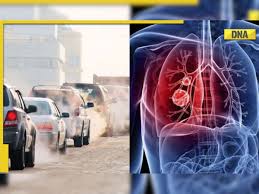
New Delhi: Prolonged exposure to air pollution can significantly increase the risk of lung cancer, even among non-smokers, according to leading oncologist Dr. Radheshyam Naik, Head of Medical Oncology, Haematology and Bone Marrow Transplantation at Sammprada Hospital, Bengaluru.
Dr. Naik pointed out that air pollution contains a range of harmful substances including benzene, formaldehyde and polycyclic aromatic hydrocarbons, which are known carcinogens. “Pollutants in the air such as diesel exhaust, vehicle emissions, and smoke from biomass burning release chemicals that can damage the DNA of lung cells, leading to mutations that may develop into cancer,” he said.
According to Dr. Naik, about 10% of all lung cancer cases are caused by environmental factors such as air pollution. “Recent research shows that prolonged exposure to polluted air raises the risk of developing lung cancer. Cities with poor air quality report more cases of lung cancer even among people who have never smoked,” he added.
He noted a 20–30% rise in lung cancer cases among non-smokers over the past few years. “The proportion of lung cancer in non-smokers has risen from around 10–20% in earlier data to nearly 40–50% in recent studies. In my own practice, around 30% of lung cancer patients today are non-smokers — a sharp increase from 10–15% about a decade and a half ago,” Dr. Naik said.
The oncologist also highlighted a disturbing trend of younger patients being diagnosed with the disease. “Earlier, lung cancer was largely seen in older adults. Now, many patients are in their 30s and 40s, and some are even younger. Increasing pollution levels, passive smoking and other environmental factors may be contributing to this shift,” he said.
One of the most striking observations, Dr. Naik added, is the rising incidence of lung cancer among women, non-smokers, and younger people. “The disease continues to be wrongly perceived as one linked only to smoking, which often delays diagnosis. Persistent cough, chest discomfort or breathing difficulty should never be ignored and must be evaluated by a doctor,” he cautioned.
While many preventive measures require policy-level interventions, Dr. Naik said individuals can also take steps to protect themselves. “People can wear masks in polluted areas, use air purifiers at home, travel in air-conditioned vehicles, and take periodic breaks from polluted cities. Avoiding smoking and growing air-purifying plants indoors can also help reduce risk,” he advised.
He stressed that there is no safe level of exposure to polluted air when it comes to cancer. “Risk increases with both the intensity and the duration of exposure,” he said.
For any query or info, kindly mail to : indiahealthbuddy.com