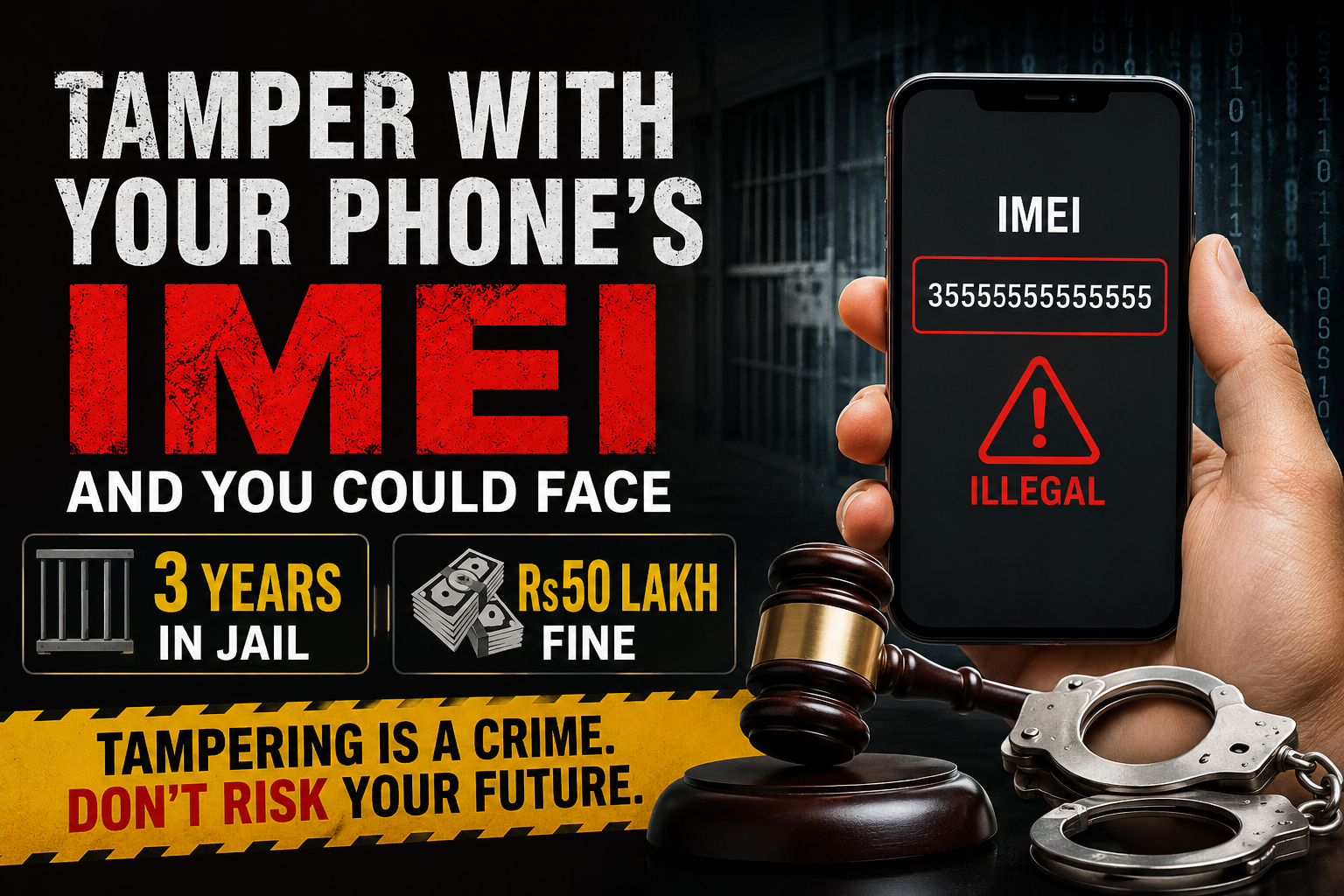
NEW DELHI: Changing or tampering with your mobile phone’s IMEI number? You could land in serious legal trouble, with violations attracting up to three years’ imprisonment, a fine of up to Rs50 lakh, or both.
The Department of Telecommunications (DoT) has cautioned citizens against altering IMEI numbers and misusing other telecom identifiers, warning that such practices can threaten the security of mobile networks and facilitate fraud.
The warning comes as mobile phones and SIM cards have become central to banking, digital payments, online services and everyday communication. The government has urged users to be particularly careful about how they obtain, use and transfer SIM cards and mobile devices, according to a government statement here.
Under the Telecommunications Act, 2023, tampering with telecom identifiers, including the International Mobile Equipment Identity (IMEI) of a handset, is a punishable offence. The law also prohibits obtaining SIM cards or telecom identifiers through fraud, cheating or impersonation.
The offences are cognizable and non-bailable, making the consequences particularly serious. The law also provides for action against people who help or encourage such offences, as per the statement.
An IMEI is a unique number assigned to a mobile device. It helps identify a handset on a telecom network. Altering or manipulating this identity can make it difficult to trace devices and can be exploited for illegal activities.
The DoT has therefore advised citizens not to use, buy or assemble devices such as modems, modules or SIM boxes with configurable or tampered IMEIs.
Users have also been warned against obtaining SIM cards using fake documents or someone else’s identity.
Importantly, the department has cautioned that a SIM card registered in one person’s name should not be handed over, rented or lent to another person for use.
This could become a problem if the SIM is subsequently used for cybercrime, fraud or another illegal activity.
In simple terms, a person cannot assume that they will escape responsibility merely because someone else used a SIM registered in their name.
The DoT has also warned against using mobile applications, websites or other tools to modify the Calling Line Identity (CLI) or other telecom identifiers.
The advisory comes against the backdrop of growing concerns over digital fraud, where mobile numbers and devices are often used as the first link in a chain of fraudulent activity.
For ordinary users, however, the message is not to panic but to verify their devices and connections and avoid shortcuts.
The government has asked citizens to use its Sanchar Saathi platform to check their mobile handsets and protect their telecom connections.
Through the service, users can verify the IMEI details of a handset, including its brand, model and manufacturer information. This can help consumers identify whether the device information corresponds with the handset they possess.
The platform also offers other services aimed at helping citizens secure their mobile connections.
The DoT has urged users to remain cautious when buying second-hand phones or obtaining SIM cards. A handset or SIM acquired through unofficial or suspicious channels can expose users to both security and legal risks.
The IMEI warning is particularly significant because telecom identifiers are not simply technical numbers. They form part of the infrastructure that allows networks to identify and manage mobile devices, said an official from the Ministry.
Any attempt to manipulate these identifiers can therefore have implications beyond an individual handset, he added.
For citizens, the safest approach is straightforward: use genuine devices, obtain SIM cards through proper identity verification, never share or transfer registered SIMs irresponsibly, and do not use software or services that promise to alter phone or network identifiers.
The DoT has also made clear that those who assist or promote such activities can face the same punishment as those directly involved.