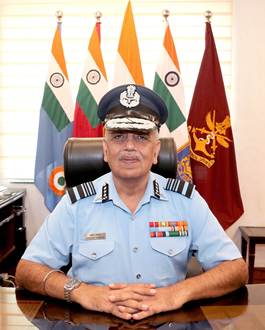
NEW DELHI: Air Marshal Sandeep Thareja took charge as the 47th Director General of the Armed Forces Medical Services (DGAFMS) on Tuesday, stepping into the top military medical post at a time when the Armed Forces Medical Services (AFMS) is undergoing a major push towards modernization, jointness, and technology-driven healthcare.
As DGAFMS, Air Marshal Thareja will oversee the delivery of comprehensive medical services to serving armed forces personnel, veterans, and their dependents.
His tenure is expected to focus on strengthening operational medical preparedness, digital health, medical research and innovation, human resource development, and the modernisation of military healthcare.
An alumnus of Armed Forces Medical College (AFMC), Pune, Thareja was commissioned into the Army Medical Corps in December 1986. A physician and gastroenterologist, he holds an MD in medicine and a DM in gastroenterology from AIIMS, New Delhi.
His nearly four-decade career has spanned clinical care, medical education, operational assignments, and senior administrative responsibilities. He has served as Commandant of 167 Military Hospital, Brigadier In-Charge of Administration and Commander of Troops at Base Hospital, Delhi Cantt, and Commandant of Command Hospital, Central Command.
His tenure at Base Hospital, Delhi Cantt, coincided with the Covid-19 pandemic, when military hospitals faced rapidly changing clinical and administrative challenges. At Command Hospital, Lucknow, he was associated with the preparation of the detailed project report for a new command hospital, which was completed in record time.
As Director and Commandant of AFMC, Pune, Thareja focused on strengthening medical education and research. His subsequent assignment as DGMS (Air) saw him take a keen interest in aerospace medicine and the country’s human spaceflight programme.
He played a key role in the Gaganyaan mission, including initiatives involving analog experiments and astronaut selection and training. His tenure also saw the deployment of the BHISHM (Bharat Health Initiative for Sahyog Hita & Maitri) medical cubes for humanitarian assistance and disaster relief operations.
The mobile medical units were gifted to the Maldives by Prime Minister Narendra Modi and were also deployed as part of India’s humanitarian assistance and disaster relief efforts in Jamaica, Cuba, Sri Lanka, and Myanmar.
His appointment comes as military healthcare is increasingly being shaped by the need to provide rapid and specialised medical support in diverse operational environments while integrating emerging technologies and digital systems.
For the AFMS, this includes strengthening trauma and emergency care, improving medical evacuation capabilities, expanding telemedicine and digital health solutions, and advancing research relevant to the unique healthcare requirements of personnel deployed in challenging conditions.
The emphasis is also likely to remain on ensuring that military medical institutions keep pace with developments in clinical medicine while maintaining high standards of training and research.
Before assuming charge, Air Marshal Thareja paid homage to India’s fallen soldiers by laying a wreath at the National War Memorial in New Delhi, marking the beginning of his tenure as the country’s senior-most military medical officer.
“His elevation places an experienced clinician, administrator, and medical educator at the helm of the AFMS, with the task of balancing the traditional demands of military medicine with a rapidly changing healthcare landscape,” said those close to him.