NOIDA: When 51-year-old Ajay Kumar’s liver and kidneys began failing, his family faced a frightening choice: wait for organs that might not come in time or find a way to save him while he was still strong enough to undergo a transplant.
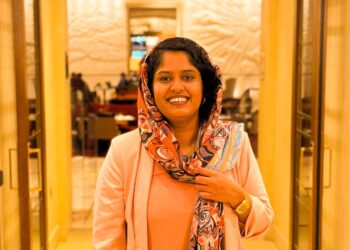
His wife and daughter stepped forward. During a rare, highly complex procedure at Yatharth Hospital, Noida Extension, two women became donors for the man in need. His wife donated a part of her liver, while his daughter donated one of her kidneys.
The two organs were transplanted in a single 15-16-hour operation, giving Ajay a chance to move beyond years of serious illness.
According to Dr. Vishal Chaurasia, Group Director-Liver Transplant, GI and Robotic Surgery, “Ajay had been living with chronic liver disease caused by hepatitis B and end-stage kidney disease. His kidney problems had become particularly severe after he underwent removal of his right kidney about a year earlier for a tumor. He subsequently developed chronic kidney disease and had to undergo hemodialysis three times a week.” Hemodialysis is a life-saving medical procedure that uses a machine and a special filter to clean your blood when your kidneys can no longer do the work.
But kidney failure was only part of the problem.
He also had type 2 diabetes, diabetic kidney damage and nephropathy, hypertension, and single-vessel coronary artery disease. His chronic liver disease added another layer of risk, added Dr Chaurasia.
For the family, the situation was therefore not simply about finding a kidney or a liver. Ajay needed both.

The medical team at Yatharth Hospital decided to perform a simultaneous liver-kidney transplant, a demanding procedure in which two failing organs are replaced during the same transplant episode.
The liver transplant brought an additional hurdle. Ajay had an O-positive blood group, while his wife’s liver was B-positive, making it an ABO-incompatible liver transplant. The donor liver also had fatty changes, adding to the complexity.
Despite these challenges, the transplant team proceeded after detailed evaluation and preparation.
“Simultaneous liver and kidney transplantation is one of the most complex forms of transplant surgery and requires meticulous planning, a high level of expertise, and seamless coordination. In this case, the ABO-incompatible liver transplant, along with the patient’s multiple comorbidity, made the procedure even more challenging. With the support and expertise of the entire transplant team, we were able to successfully manage this complex transplant surgery,” said Dr Chaurasia.
The kidney transplant too came with its own surgical challenge. The donor’s left kidney had two renal arteries, requiring reconstruction to ensure adequate blood supply to the transplanted organ.
Doctors also found that Ajay’s right iliac vessels were unsuitable for connecting the transplanted kidney. The team therefore planned the vascular connection to the left lilac vessels. The iliac vessels are major paired blood vessels in the lower abdomen and pelvis that branch from the main aorta and inferior vena cava to supply and drain the pelvis and legs.
“The kidney transplant was performed during the same surgical procedure as the liver transplant, requiring a high degree of surgical precision and careful coordination,” said Dr Pragnesh Desai, Senior Director & Head – Urology, Renal Transplant, Robotics & Uro-Oncology.
Both donor operations were performed laparoscopically, according to the hospital.
For Ajay, however, the technical details of the surgery tell only half the story.
Behind the long operation was a family decision that made the transplant possible. His wife was willing to part with a portion of her liver, an organ capable of regeneration, while his daughter came forward to donate one of her kidneys.
Their decision also meant that Ajay did not have to depend entirely on the uncertain wait for a deceased-donor organ.
Dr Upendra Singh, Senior Consultant & Head – Nephrology, said Ajay had chronic kidney disease requiring regular dialysis along with chronic liver failure. “Simultaneous transplantation made it possible to address both organ failures through a single transplant procedure,” he said.
The operation required transplant surgeons, urologists, neurologists, anesthetists, blood-bank specialists and critical-care teams to work together. The postoperative period was equally important, with close monitoring needed to ensure that both transplanted organs began functioning properly.
The early signs were encouraging. Both the liver and kidney grafts started functioning well and Ajay showed good recovery after the surgery.
For a family that had watched him struggle with dialysis, liver disease, and health problems, the outcome offered something precious. It was worth more than a successful operation—time.
Time for Ajay to return to his family. Time for his wife and daughter to see him recover. And, perhaps most importantly, time that two women in his family were willing to help give him.
The case also highlights a less discussed side of organ transplantation. Even when a medically suitable transplant is possible, the availability of organs can remain a major hurdle. Living donation may help, but it carries medical, ethical, and emotional considerations. The medical team conducts a careful evaluation of donor safety.
In Ajay’s case, the transplant became possible because two family members were medically suitable and willing to donate.
Preparation before transplantation was important, Dr. Singh said. During surgery, effective management and after-operation monitoring were critical for a successful outcome.
The hospital said the procedure reflects its capability to undertake complex liver and kidney transplantation.
Dr. Prahlad Agrawal, COO – Noida Extension, said, “This outcome demonstrates that our hospital is equipped to undertake highly complex medical procedures. Successfully completing such a complicated transplant surgery requires not only clinical expertise but also strong and continuous administrative and operational support.”
But for Ajay and his family, its significance is more personal.