NEW DELHI: For the first time, devotees in three important Buddhist centres of Arunachal Pradesh will get an opportunity to pay homage to sacred relics of Gautama Buddha preserved at the National Museum in the national capital. The relics, excavated at Piprahwa in Uttar Pradesh, will travel to Tawang, Bomdila and Namsai from October 31 to November 21 as part of a special exposition.
The 22 sacred bone fragments recovered during archaeological excavations at Piprahwa are regarded as exceptionally rare. Of these, 20 are preserved at the National Museum in Delhi and two at the Indian Museum in Kolkata. The relics being taken to Arunachal Pradesh are from the National Museum collection.
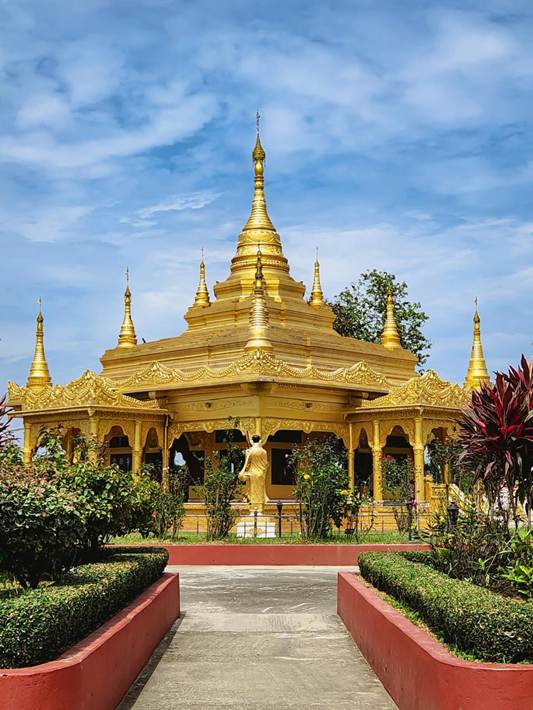
The exposition will begin at the historic Tawang Monastery, where the relics are scheduled to arrive on October 31. They will be available for public viewing at the monastery from November 1 to 7. They will then move to TGL Monastery (Lower Gompa) in Bomdila, where devotees can pay their respects from November 8 to 13. The final leg will be at the Golden Pagoda in Namsai from November 14 to 20. The relics are scheduled to return to the National Museum on November 21.
The Ministry of Culture is organising the exposition in collaboration with the Arunachal Pradesh government, the International Buddhist Confederation and the National Museum. Union Culture and Tourism Minister Gajendra Singh Shekhawat is scheduled to attend the inaugural ceremony at Tawang Monastery on October 31. Arunachal Pradesh Chief Minister Pema Khandu is expected to attend a further inaugural function on November 1.
The relics have a significant archaeological history. They originate from Piprahwa, in present-day Siddharthnagar district of Uttar Pradesh, a site associated with ancient Kapilavastu and the Shakya community to which Buddha belonged.
In 1898, British engineer William Claxton Peppé excavated a stupa at Piprahwa and discovered reliquaries containing bone fragments and precious objects. The discovery brought international attention to the site’s association with early Buddhist history.
Further excavations by the Archaeological Survey of India between 1971 and 1977, under archaeologist K M Srivastava, revealed two additional reliquary caskets containing ancient bone fragments traditionally associated with Buddha. The larger casket contained 12 fragments and the smaller one 10, taking the total recovered in these excavations to 22.
The relics are regarded with deep reverence by Buddhist communities. The tradition of enshrining Buddha’s corporeal remains in stupas developed after his Mahaparinirvana and became an important part of Buddhist religious practice. Over centuries, such sites evolved into centres of pilgrimage, learning and cultural exchange.
The choice of Tawang, Bomdila and Namsai brings the relics to communities representing different Buddhist traditions within Arunachal Pradesh.
Tawang Monastery, also known as Gaden Namgyal Lhatse, is a major centre of Himalayan Buddhism and monastic learning. The monasteries of Bomdila also preserve the religious and cultural traditions of the region.
Namsai, in eastern Arunachal Pradesh, has a strong association with Theravada Buddhism, followed by the Tai Khamti and other Buddhist communities. The exposition will therefore connect communities with distinct traditions through a shared reverence for Buddha.
The Tawang programme will coincide with Lhabab Düchen, an important festival in the Tibetan Buddhist tradition that commemorates Buddha’s descent from the heavenly realm.
An accompanying exhibition, titled “Unearthing the Sacred Piprahwa: The Story of the Holy Buddha Relics and Their Discovery”, will be organised at all three locations by the International Buddhist Confederation.
It will trace the discovery of the relics, the subsequent archaeological excavations and the history of the Piprahwa jewels. It will also cover the proposed international auction of the jewel collection in 2025 and the efforts that led to its return to India after around 127 years.
The return of the Piprahwa jewel collection in 2025 had renewed public interest in the archaeological site’s history and its place in India’s Buddhist heritage. The exhibition aims to help visitors understand the links between archaeological research, religious traditions and the preservation of cultural objects.
The exposition will also be accompanied by an international conference on “Buddhism: Dissemination in the Himalayan Region and Beyond” at the Kalawangpo Convention Hall in Tawang on November 2.
The conference is expected to bring together Buddhist monks, scholars and delegates from India, Nepal, Sri Lanka, Myanmar, Malaysia, Indonesia and Germany. Discussions will cover the transmission of Buddhist teachings after Buddha’s Mahaparinirvana, the continuity of Buddhist traditions in the Himalayan region, and the relevance of Buddhist ethics in contemporary life.