New Delhi: The diagnosis of gastrointestinal (GI) cancers in patients as young as 15 at a Delhi hospital has raised concerns among specialists, who have called for research into possible environmental risk factors, including long-term exposure to air pollution.
They cautioned, however, that pollution cannot be identified as the cause without stronger evidence.
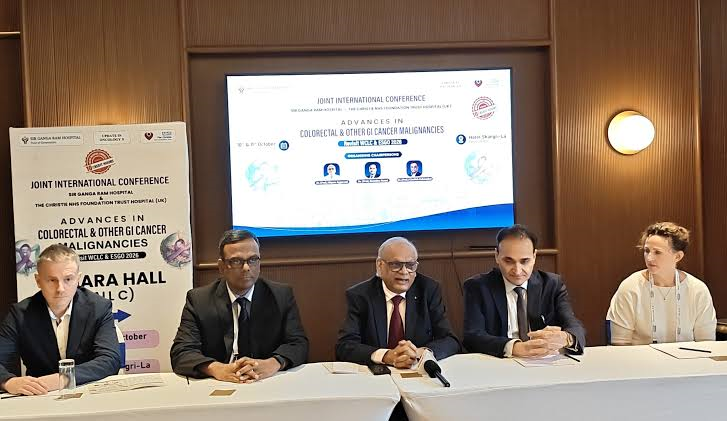
The issue is being discussed threadbare at a two-day international conference on colorectal and other GI cancers organised by Sir Ganga Ram Hospital in collaboration with The Christie NHS Foundation Trust, U.K., on October 10 and 11.
“Cancer prevention can no longer be discussed only in terms of tobacco, diet and lifestyle. In our OPD we are now seeing new GI cancer patients as young as 15 years old which was uncommon 5 years ago. We must also pay attention to the environment in which people live,” said Dr. Shyam Aggarwal, Organising Chairperson of the conference and Chairperson, Department of Medical Oncology, Sir Ganga Ram Hospital, New Delhi.
He cited a 2026 review of 70 studies on air pollution and gastrointestinal diseases which found an association between long-term exposure to fine particulate matter (PM2.5) and higher mortality from GI cancers, particularly colorectal cancer. Another study, published in Nature Health in 2026, reported associations between exposure to PM2.5, nitrogen dioxide and ozone and overall cancer risk.
The findings do not establish that these pollutants directly cause GI cancers. Researchers said further studies are needed to determine whether, and to what extent, air pollution contributes to specific cancers.
The question assumes significance in the context of changing patterns of colorectal cancer. An analysis of birth-cohort trends in England and India cited in the conference discussion found that bowel cancer incidence among people under 50 in England rose from 3.9 per 100,000 in 2001 to 8.4 per 100,000 in 2023. India’s early-onset colorectal cancer rate was estimated at 3.5 per 100,000 among people aged 25–49.
While the rates remain comparatively lower in India, urban cancer registries have reported a steady increase in colorectal cancer, and hospital studies have documented younger patients presenting at advanced stages. The findings underline the need for more research into age-related trends, risk factors and opportunities for earlier diagnosis.
Dr. Saumitra Rawat, Chairman, Department of Surgical Gastroenterology, GI and HPB Onco-Surgery and Liver Transplantation, Sir Ganga Ram Hospital, said, “The diagnosis of gastrointestinal cancer in younger patients is a serious concern and calls for a comprehensive investigation into the factors that may influence disease development. Family history, genetic susceptibility, diet, lifestyle, infections and possible environmental exposures all deserve appropriate consideration. We must strengthen Indian research to understand these factors rather than draw conclusions from associations alone. Equally important are awareness of persistent digestive symptoms, timely medical consultation and access to multidisciplinary cancer care.”
Ground-level ozone is one pollutant that researchers are examining. Unlike the protective ozone layer in the upper atmosphere, ground-level ozone is formed when nitrogen oxides and volatile organic compounds react in sunlight. Vehicle emissions, industrial activity and other sources contribute to the formation of these precursor pollutants. Ozone levels can rise during sunny and warm conditions, making year-round monitoring important.
Delhi’s exposure to a mixture of pollutants makes it important to study the long-term health effects of poor air quality. Researchers also need to establish whether environmental exposures interact with other risk factors, including genetic susceptibility, diet, lifestyle and infections. The extent to which processes such as oxidative stress and chronic inflammation may contribute to specific GI cancers remains uncertain.
The conference also highlighted the importance of international collaboration in cancer research and treatment.
Dr Selvasekar Chelliah, Consultant Colorectal and Laparoscopic Surgeon, The Christie NHS Foundation Trust, UK, said, “International collaboration enables specialists to exchange clinical experience and examine new evidence that can improve the management of colorectal and other gastrointestinal cancers.
“Bringing together expertise in medical oncology, surgical oncology and other disciplines helps strengthen multidisciplinary decision-making and supports continuous improvement in patient care. Such partnerships can also encourage further research into prevention, early diagnosis and the environmental factors that may influence long-term health.”
Punya Salila Srivastava, Secretary, Union Ministry of Health and Family Welfare, said, “Addressing the cancer burden requires a strong focus on prevention, early diagnosis, public awareness and access to quality healthcare.
“Collaborative efforts between leading medical institutions and evidence-based research are essential to strengthening cancer care and improving health outcomes across the country.”
Dr. Ajay Swaroop, Chairman, Board of Management, Sir Ganga Ram Hospital, added, “Our partnership with The Christie NHS Foundation Trust reflects our commitment to bringing global expertise together to advance cancer care and improve outcomes for patients. We believe that sharing knowledge across institutions and countries can open new avenues for research, strengthen treatment approaches and help address the growing cancer burden.”
Experts have also called for stronger air-quality monitoring, improved cancer registries and long-term Indian studies linking pollution exposure with clinical outcomes. They stressed that research into environmental risks should go hand in hand with established measures such as early diagnosis, public awareness and access to appropriate cancer care.