NEW DELHI: For 83 days, every breath was a battle for 7-year-old Gargi. For nearly 40 of those days, a ventilator did the work her weakened body could no longer manage. Once a lively child, she was suddenly fighting a life-threatening neurological illness that left her paralysed and unable to breathe on her own.
For her mother, Rajeshwari, a domestic cook, the ordeal was as frightening as it was uncertain. Would her daughter survive? Would she ever walk again? And how would the family afford the prolonged treatment her critically ill child needed?
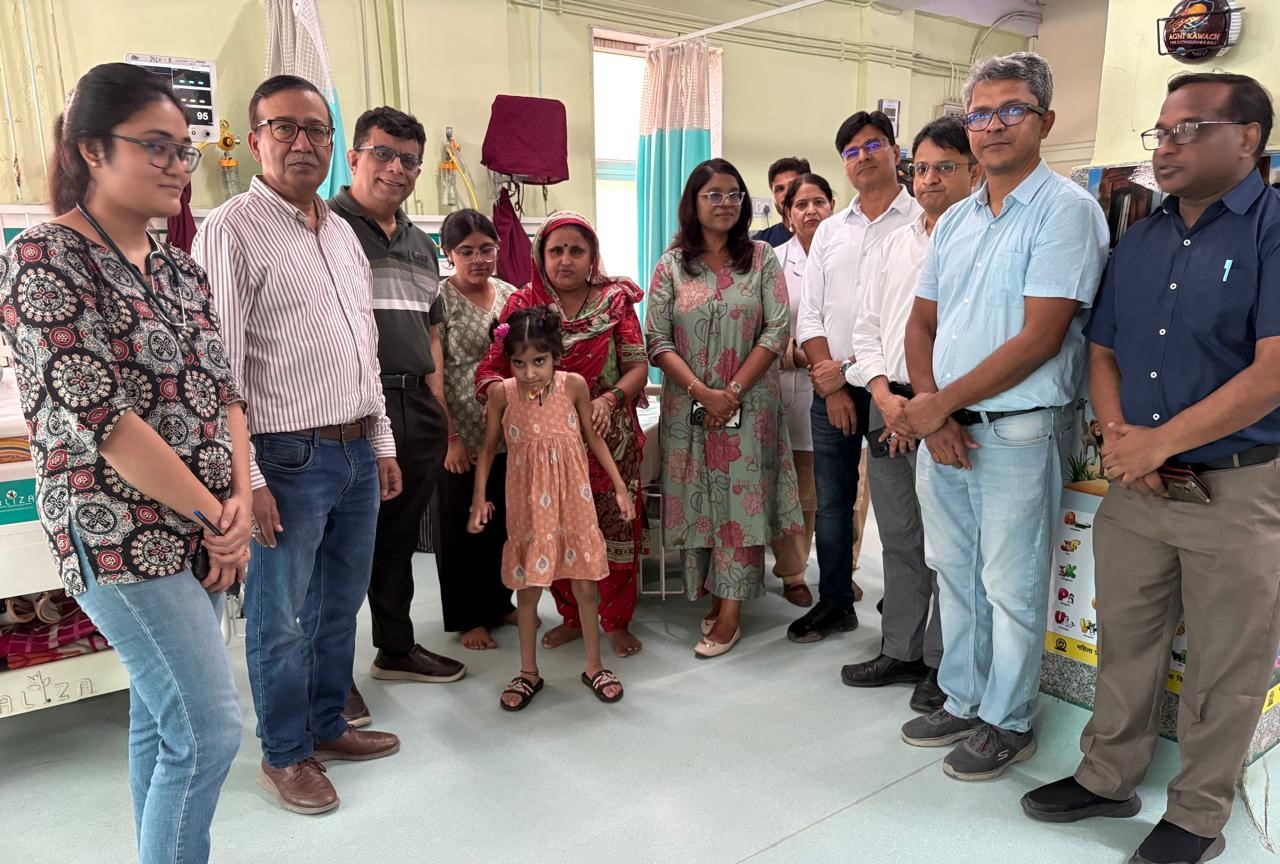
Today, Gargi is back home, slowly regaining her strength after battling severe Guillain-Barré syndrome (GBS) at Delhi’s municipal corporation-run Swami Dayanand Hospital. Her recovery has been a long, painstaking journey, made possible by intensive medical care, a well-equipped public hospital and a team of doctors and healthcare workers who stayed with her through the most difficult days.
For a family with limited means, the hospital became more than a place of treatment. It became a lifeline.
“By the time Gargi reached us, the paralysis had progressed considerably. She was critically ill and needed prolonged ventilator support,” said Dr Surendra Singh Bisht, head of the paediatrics department at the hospital and her treating doctor.
Gargi had suffered a similar episode about a year earlier, when the family struggled to meet the cost of treatment, particularly immunoglobulin therapy. An immunoglobulin injection can cost around Rs 15,000, depending on the preparation and dose, Dr Bisht said, making treatment expensive when several doses and prolonged hospitalisation are needed.
This time, her condition had deteriorated so much that admission elsewhere had been difficult, her mother recalled. By the time she reached Swami Dayanand Hospital, the family was confronting not only a medical emergency but also the fear of losing a child.
What followed was an 83-day effort involving intensive care, close monitoring, respiratory support and coordination among specialists. The hospital team worked to keep Gargi stable while giving her body time to recover from the damage caused by the disease.
When the body stops responding
GBS is a rare disorder in which the immune system mistakenly attacks the peripheral nerves, disrupting the signals that travel between the brain and muscles. It can begin with weakness in the legs and rapidly progress to paralysis. In severe cases, it affects the muscles needed for breathing and swallowing, making intensive care and ventilator support essential.
Dr Bisht explained the condition to the family by comparing nerves to electrical wires carrying messages from the brain to the rest of the body. When the protective structures of these nerves are damaged, the signals no longer travel properly, leaving muscles weak or paralysed.
In Gargi’s case, the illness had progressed to respiratory failure, requiring prolonged mechanical ventilation. Her treatment demanded round-the-clock attention, with doctors and nurses monitoring her breathing, vital signs, nutrition and the risks associated with extended intensive care.
For a municipal hospital, managing such a prolonged and complicated case was a demanding test of its critical-care facilities. But the hospital had built up its capacity over the years, particularly during the Covid-19 pandemic, when additional equipment and critical-care infrastructure became essential.
Dr Bisht said ventilators and other support systems had been strengthened with assistance from organisations such as Care India, which supported paediatric critical-care infrastructure, and additional equipment received through MP funds provided by local MP Manoj Tiwari.
A team that stood by her
Gargi’s recovery depended not on one intervention alone but on the sustained efforts of several teams. Paediatricians worked alongside ENT specialists, anaesthesia staff, nurses, dietitians and other healthcare workers to manage the complications of her illness and support her recovery.
Dr Sunita Kujur, medical superintendent of the hospital, said the facility had the infrastructure and medical teams needed to treat underprivileged patients with serious conditions such as GBS.
Once Gargi’s condition began to stabilise, the focus gradually shifted from keeping her alive to helping her regain the abilities the illness had taken away. She was gradually weaned off the ventilator, followed by oxygen and continuous positive airway pressure (CPAP) support.
Physiotherapy was introduced as her strength and medical condition improved. Nutrition was also closely monitored, as prolonged critical illness and immobility can leave patients severely weakened.
Recovery from severe GBS can be slow. Even after the immune attack is controlled, damaged nerves need time to heal, and muscle strength may return gradually. For Gargi, every step forward was therefore an important milestone after weeks in which even breathing independently had been difficult.
Dr Bisht said he had also treated another child who was brought to the hospital soon after developing symptoms suggestive of GBS. Early treatment helped limit the severity of the illness, and the child experienced a shorter course with relatively mild weakness. Gargi’s advanced condition when she arrived, he said, highlighted the importance of recognising the disease early.
A public hospital, a family’s hope
The prolonged treatment also illustrates the importance of public hospitals for families who cannot afford extended private intensive care. Ventilation, specialist consultations, nursing care and rehabilitation over several weeks can impose a devastating financial burden on households with limited incomes.
For Rajeshwari, the greatest relief has been seeing her daughter survive the crisis and begin the slow process of recovery. The 83 days in hospital were filled with uncertainty, as she waited to learn whether Gargi would breathe independently, regain movement and return home.
Now, the fear that once dominated those days is gradually giving way to hope as Gargi begins regaining her strength and taking steps again.
Dr Bisht emphasised that parents should not ignore sudden weakness in a child, particularly when it begins in the legs, affects walking or appears to move upwards. Difficulty swallowing, speaking or breathing requires urgent medical attention.
For Gargi and her mother, the road ahead may still involve rehabilitation and patience. But after nearly 40 days on a ventilator and more than 80 days under hospital care, returning home is itself a remarkable turning point.
Her story is also a reminder that behind public healthcare infrastructure are the doctors, nurses and support staff whose training, commitment and compassion can make the difference between a family’s worst fear and the possibility of a new beginning.