NEW DELHI: A new rapid test developed by Indian researchers could help doctors identify a serious complication of haemophilia A within minutes, potentially improving access to timely treatment in hospitals and laboratories that lack specialised testing facilities.
The test is designed to detect antibodies, known as factor VIII inhibitors, which can develop in some patients with haemophilia A. These antibodies neutralise the clotting factor given to control bleeding, making standard factor VIII replacement treatment less effective or ineffective.
The test uses tiny latex beads coated with recombinant factor VIII. When a blood sample containing antibodies against factor VIII is added, the beads clump together. This reaction can be seen with the naked eye within three to five minutes.
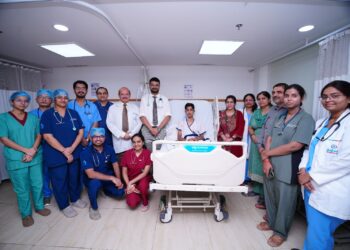
The study, published online in the Indian Journal of Medical Research on November 3, was conducted by researchers from KJ Somaiya Hospital and Research Centre and KJ Somaiya Medical College, Mumbai.
The team included Dr Fiza Jivani, Dr Shruti Vilas Kharat, Dr Kranti Patil, Dr Gurpreet Kaur Saini, Dr Anam Dhawlarker, Dr Juili Bharankar, Dr Nilesh Tatkare and Dr Shrimati Shetty.
The researchers said the conventional Nijmegen-modified Bethesda assay, used to detect these inhibitors, can take four to six hours and requires specialised laboratory facilities. It may also be unavailable in smaller hospitals and centres outside major cities. The new test, by contrast, costs around Rs 100 per test, compared with an estimated Rs 2,000 to Rs 20,000 for the conventional assay.
Haemophilia A is an inherited bleeding disorder caused by a deficiency of clotting factor VIII. Patients can experience prolonged bleeding, including bleeding into joints and muscles. Regular treatment with factor VIII concentrates helps prevent or control such episodes.
However, around 30% of patients with haemophilia A may develop inhibitors — antibodies that attack the replacement factor and reduce its effectiveness. If these inhibitors go undetected, doctors may continue with a treatment that is no longer working adequately, leaving patients vulnerable to repeated bleeding and complications.
Early detection can help doctors identify why a patient is not responding to factor VIII treatment and consider alternative treatment options. The rapid test could be particularly useful when a patient develops a breakthrough bleed or needs urgent treatment or surgery. It may also help centres without specialised coagulation laboratories make quicker initial assessments.
The researchers evaluated the test using samples from around 200 patients with haemophilia and 47 healthy volunteers. Compared with the standard assay, it showed 92% sensitivity and 96% specificity. Its negative predictive value was 98%, suggesting that a negative result could be useful in ruling out the presence of inhibitors in the tested population.
The authors describe the test as a rapid, equipment-free method that can support point-of-care detection, including in settings with limited laboratory infrastructure.
However, they cautioned that it is a screening test and cannot replace the standard confirmatory assay. It also cannot provide the exact level, or titre, of inhibitors. A positive result must therefore be confirmed through a functional test such as the Nijmegen-modified Bethesda assay before treatment decisions are made.
The researchers said the test could make inhibitor screening more accessible, particularly in resource-limited settings where delays in specialised testing can affect treatment decisions.
India has an estimated 1.4 lakh people living with haemophilia, making it one of the countries with the largest patient populations globally. However, only around 26,352 patients were diagnosed and registered, according to the World Federation of Hemophilia’s Annual Global Survey 2024. The substantial gap points to widespread underdiagnosis and limited access to specialised diagnostic facilities.
The experts cautioned that the 1.4 lakh figure refers to the estimated haemophilia population, not confirmed cases of haemophilia A alone. The registered figure also includes patients with different types of haemophilia.