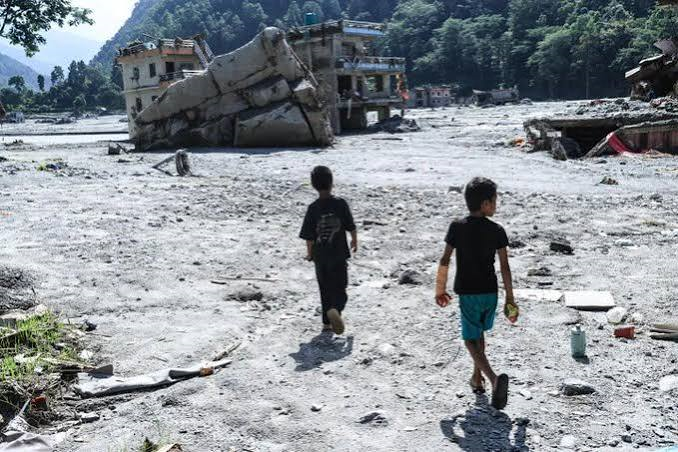
NEW DELHI: For children who have lost their homes, schools and belongings in the devastating floods in Nepal and Tibet, the immediate needs are basic: food, warm clothes, shelter and medical care.
But doctors working with vulnerable communities in the Himalayas say the health crisis may not end when the floodwaters recede.
Crowded shelters, poor sanitation, interrupted healthcare and displacement can increase the risk of infectious diseases, while children who have lost schools and homes can face a long road back to normal life.
Now, physicians who have spent years working with Tibetan refugee children in India are using the community network they built through their tuberculosis programme to help families affected by the Aug 26 flash floods.
Johns Hopkins Medicine has launched a relief fundraiser to provide medical supplies, blankets, tents, warm clothing, food and heaters. The effort will also support longer-term health screening and treatment, education and rehabilitation for children and families affected by the disaster.
“Their homes are gone, food is scarce and children are hungry,” said Dr Kunchok Dorjee, assistant professor of medicine and international health at the Johns Hopkins University School of Medicine. “Diseases will surge. We want to do everything we can to prevent this.”
For Dorjee, the response is personal as well as professional. He grew up in the Himalayas and has spoken about seeing poverty and its impact on communities first-hand. His medical and research work has since focused on improving healthcare among vulnerable populations.
The doctors are drawing on the infrastructure of Zero TB in Kids, a Johns Hopkins-led global health programme that has worked since 2017 in Tibetan communities in northern India.
The programme focuses on active TB case finding, screening for TB infection, preventive treatment and follow-up. It has operated in schools, monasteries, nunneries and other settings where children live and study together.
A prospective study published in The Lancet Regional Health – Southeast Asia found that TB incidence among participants fell by 83% between 2017 and 2024. TB infection prevalence fell by 32% during the same period. More than 20,000 schoolchildren and adults across 63 institutions were included in the analysis, while 3,847 people received preventive TB treatment.
The programme’s success, researchers say, was not based on medicine alone. Regular screening, early identification, preventive treatment and close engagement with communities were central to the effort.
“Over the eight-year period, screening and TPT led to an 83% reduction in TB incidence and a 32% reduction in the prevalence of latent TB infection among children,” Dorjee said in March after the study was released.
The experience has now created a different kind of resource: a trusted network that can be mobilised quickly when communities face a disaster.
Floods can destroy much more than houses. Schools may become inaccessible or damaged. Medicines and health records can be lost. Families can be separated and routine medical care disrupted.
For children already living in vulnerable conditions, these disruptions can have a lasting effect.
The Johns Hopkins relief effort plans to combine immediate assistance with longer-term health support, including screening and treatment for infectious diseases and educational assistance. The team says its existing community relationships will help it identify families who need support.
The group is also involved in other health and education programmes in the region.
Its work in Nepal includes research and community programmes related to dengue and prevention of stomach cancer. Another initiative, the Smart Kids Initiative, supports education and wellbeing among children in Tibet, Nepal and India, including those who are orphans, semi-orphans or separated from their families.
With schools in flood-affected areas damaged, the education programme could become an important part of the recovery effort.
Dorjee said the team intends to use the relationships and systems developed through its earlier programmes to support flood-affected communities.
“We will leverage these programs to provide support to people affected by this flood,” he said. “The road to recovery is difficult. We want to provide a smoother path to support the basic needs of this community and their long-term health outcomes.”