NEW DELHI: For thousands of people living with urinary problems, identifying the source of the condition can be as challenging as treating it. Frequent urination, urgency, urinary leakage, difficulty emptying the bladder and retention can arise from problems in the urinary tract, the nervous system or both.
A first in India, an advanced diagnostic centre at Vardhman Mahavir Medical College (VMMC) and Safdarjung Hospital in New Delhi, seeks to help doctors distinguish between these causes by assessing bladder function alongside the brain’s response to bladder activity.
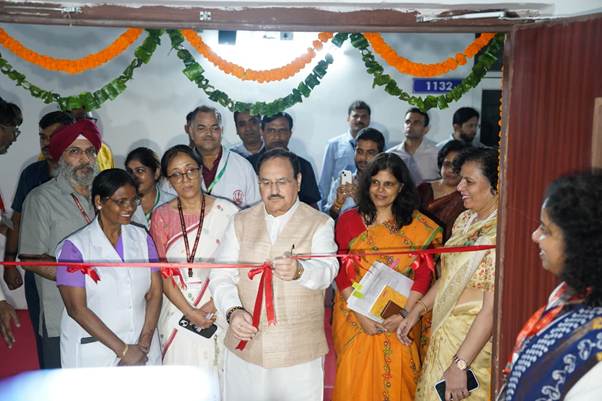
Union Health Minister JP Nadda inaugurated the bladder diagnostics centre along with newly installed PET-CT and SPECT-CT facilities in the Department of Nuclear Medicine at Safdarjung Hospital.
The Centre for Advanced Bladder Diagnostics integrates Video Urodynamics (VUDS) with Near Infrared Spectroscopy (NIRS)-based brain mapping. Hospital officials said this combination is being attempted for the first time in India.

The facility comes against the backdrop of a substantial burden of urinary and bladder disorders in India, although there is no single national estimate covering all such conditions. Urinary symptoms are seen across age groups and are associated with conditions ranging from prostate enlargement and urinary tract disorders to diabetes, spinal injuries, stroke and other neurological diseases. In many patients, particularly those with neurological disorders, determining whether the problem originates in the bladder or in the nervous system can influence treatment.
“Symptoms may appear similar, but the underlying cause can be different. In some patients, the bladder itself is affected, while in others the nervous system’s control of the bladder is impaired,” a senior neurologist at the hospital said.
VUDS records how the bladder stores and releases urine, including changes in pressure during filling and emptying. At the same time, NIRS is used to monitor changes in blood oxygenation in the brain while the bladder is being filled and emptied.
The combined assessment could provide doctors with additional information on the communication between the brain and the bladder and help determine whether urinary dysfunction is primarily urological, neurological or a combination of the two.
The centre is expected to cater to about 5,000 patients annually. The hospital said the service would be available at an affordable cost, potentially improving access to specialised investigations for patients who may otherwise have to depend on private facilities.
The facility is not intended to replace conventional evaluation. Doctors would decide which patients require advanced testing based on their symptoms, examination and clinical history.
Similarly, the PET-CT facility is expected to strengthen cancer diagnosis, staging and treatment planning. It will also support assessment of treatment response and follow-up in patients with cancer.
PET-CT combines anatomical imaging with information on metabolic activity, allowing doctors to identify areas that may not be apparent through conventional imaging alone. The facility is expected to support specialities including medical and radiation oncology, haematology, urology, nephrology and paediatric oncology.
The SPECT-CT facility will expand nuclear medicine services for conditions involving the heart, kidneys, endocrine system, bones and gastrointestinal tract. By combining functional and anatomical imaging, the technology can provide additional information for diagnosis and treatment planning.
Together, the PET-CT and SPECT-CT services are expected to cater to around 600-700 patients annually. The hospital said the investigations would be offered at an affordable cost.
The bladder centre will also be used for postgraduate teaching and specialist training, giving medical students and doctors exposure to advanced diagnostic techniques.
The three facilities are part of a broader expansion of specialised diagnostic services at Safdarjung Hospital, which caters to patients from Delhi as well as those referred from other parts of the country.
During his visit, Nadda also reviewed the Heart Command Centre and Sports Injury Centre and took stock of ongoing projects at the hospital. He stressed the need for regular monitoring of projects, periodic inspections and realistic timelines to ensure that newly created facilities become functional without avoidable delays.