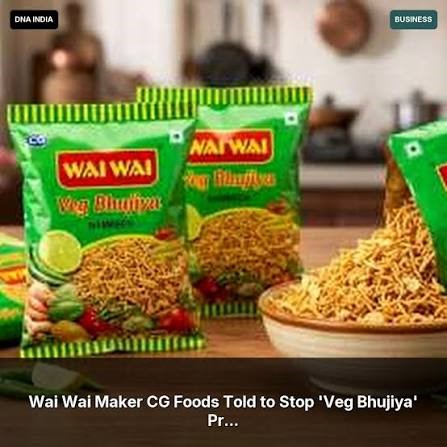
NEW DELHI: Nearly 32 tonnes of food stock, including loose broken noodles, was seized after a Food Safety and Standards Authority of India (FSSAI) inspection at a manufacturing unit of CG Foods India Pvt Ltd in Rajasthan. The crackdown came after it found alleged violations ranging from unsafe processing and predated packaging to unlicensed production and poor hygiene practices.
The regulator has directed the company to discontinue production of Veg Bhujia Namkeen following the inspection at its Roopangarh unit in Ajmer. The action comes amid a wider enforcement drive to check compliance with food safety and licensing requirements.
According to FSSAI, the inspection found that broken noodles collected from the floor were being reprocessed into bhujia products without heat treatment. Inspectors also found packaging carrying dates that had allegedly been put on the products in advance.
The regulator seized 32,107.2 kg of stock at the premises, including loose broken noodle material. In addition, 1,925 boxes of expired finished products were detained during the inspection.
The findings have raised concerns not merely about labelling violations but about the basic controls expected in a food manufacturing facility, particularly where discarded or contaminated material could potentially re-enter the production chain.
FSSAI said it also detected the manufacture of “Wai-Wai MaMa” and “Wai-Wai Mama Punte” bhujia variants without the required licence, in alleged violation of Section 31(1) of the Food Safety and Standards Act, 2006.
Several deficiencies relating to hygiene and documentation were also recorded. These included inadequate pest-control records and other shortcomings linked to food hygiene and safety procedures.
The regulator collected samples of loose noodle material, the two Veg Bhujia products, used cooking oil from the frying line and Wai-Wai Ready to Eat Noodles for laboratory testing. Further action will depend on the laboratory findings and the outcome of the inspection.
The FSSAI has directed the food business operator to stop production of the Veg Bhujia Namkeen products until the required approvals and safety measures are in place. It said further legal and regulatory action would be taken under the Food Safety and Standards Act, 2006, based on the inspection findings and laboratory reports.
The action against CG Foods came on the same day as a separate enforcement operation in Bengaluru involving British Lifesciences Pvt Ltd, where inspections of infant food products allegedly found misbranded and expired products.
FSSAI said a substantial quantity of misbranded infant food was seized from the company, and legal proceedings were initiated against the food business operator.
The action against the two companies highlights the regulator’s focus on enforcement across different segments of the food chain—from manufacturing practices and licensing to the safety and labelling of products meant for infants and young children.
While laboratory testing will determine the nature and extent of any food safety risk in the CG Foods case, the inspection findings point to multiple compliance failures occurring at the same facility. The regulator’s action will now be closely watched for the outcome of the laboratory tests and the penalties or other measures that may follow.