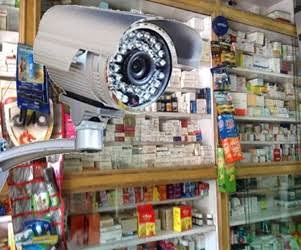
NEW DELHI: Medical stores may soon have to keep more than prescription records. The Union Health Ministry has proposed mandatory CCTV surveillance at licensed premises supplying prescription medicines, with recordings to be retained for at least three months.
The proposal has triggered strong opposition from the All India Organisation of Chemists and Druggists (AIOCD), which represents retail chemists and distributors. The association has argued that a blanket CCTV requirement could impose significant financial and operational pressure on smaller pharmacies, particularly in rural and remote areas.
The proposal is part of a draft amendment to the Drugs Rules, 1945, issued through G.S.R. 791(E) on September 8, 2026. It seeks to insert a new sub-rule, 2A, under Rule 65.
The draft says that supply of any drug on the prescription of a registered medical practitioner, other than wholesale dealing, should take place under a CCTV surveillance system installed and maintained at the licensed premises. The recordings would have to be preserved for a minimum of three months.
The ministry has said the move is intended to strengthen regulatory oversight of Schedule H, H1 and X drugs and curb their unauthorised access and sale. The proposal follows deliberations by the Drugs Consultative Committee (DCC) and the Drugs Technical Advisory Board (DTAB).
An important aspect of the proposal is the difference between the government’s stated objective and the wording of the draft.
The Ministry has specifically cited concerns over Schedule H, H1 and X drugs. However, the proposed Rule 65(2A) refers to “any drug supplied on the prescription of a Registered Medical Practitioner” rather than limiting the CCTV requirement to these three schedules. Wholesale transactions are excluded.
If notified in its present form, the provision could therefore have implications beyond pharmacies selling only Schedule H, H1 or X medicines.
These medicines already have additional controls under the Drugs Rules, including prescription and record-keeping requirements for specified categories. CCTV would add another layer of monitoring at the point of sale.
The AIOCD has strongly opposed the proposed blanket requirement in a representation to Health Secretary Punya Salila Shrivastava.
The association has argued that a reliable surveillance system would require several high-definition cameras, a digital video recorder, substantial storage capacity for three months of footage, wiring and a stable internet connection. It has estimated the cost for a retail pharmacy at around Rs50,000 to Rs10 lakh, depending on the infrastructure required.
The association says such expenditure could be particularly difficult for small independent chemists operating on thin margins.
It has also raised concerns about implementation in villages and remote areas, where power cuts and poor internet connectivity could make continuous recording difficult. In such locations, the AIOCD said, access to technicians for repairing faulty equipment may also be limited.
The association has further expressed concern that pharmacies could face regulatory action if CCTV systems stop functioning because of technical failures beyond the chemist’s control.
The AIOCD General Secretary Rajiv Singhal said that while large pharmacy chains may be able to absorb the additional costs, smaller retailers may struggle. “Our association has therefore sought reconsideration of a uniform mandate and said that if the government considers surveillance essential for public health, financial support for installation and maintenance should also be considered.”
The move is not entirely new. CCTV surveillance at pharmacies has already been pursued in several parts of the country under initiatives aimed at preventing misuse of prescription and psychotropic medicines.
The National Commission for Protection of Child Rights (NCPCR), in collaboration with the Narcotics Control Bureau, had earlier pushed for monitoring of medical stores selling Schedule H, H1 and X drugs as part of a joint action plan to prevent drug and substance abuse among children. A 2024 Lok Sabha reply said that 3,69,727 CCTV cameras had been installed at medical or pharmacy shops selling such drugs by March 2024.
The DCC also considered the issue at its March 2026 meeting. It agreed that CCTV installation at medical stores could be made mandatory through an amendment to the Drugs Rules and said cameras should be positioned so that sales could be verified. The committee also considered developing a centralised drug information system capable of providing real-time data on medicines prone to misuse.
The issue has also been linked to efforts to track and trace narcotic and psychotropic medicines across the supply chain.
The Union Health Ministry has invited objections and suggestions from stakeholders and members of the public. The draft will be considered after the prescribed consultation period.