NEW DELHI: When 62-year-old Ramesh Kumar (name changed) suffered a brain stroke and was admitted to the intensive care unit (ICU), doctors urgently needed an MRI scan to assess the extent of damage. But shifting him to the radiology department was considered highly risky. He was on oxygen support, connected to multiple monitors and intravenous lines, and even a brief transfer outside the ICU could have worsened his condition.
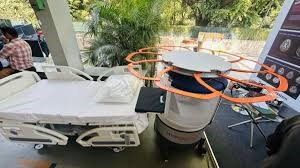
Instead of moving the critically ill patient to the MRI suite, doctors brought the MRI machine to his bedside.
Within minutes, brain imaging was performed inside the ICU itself, allowing specialists to rapidly evaluate the stroke and initiate timely treatment without exposing the patient to the hazards associated with transport.
Such bedside imaging, once considered futuristic, is now becoming a reality at the All India Institute of Medical Sciences (AIIMS), Delhi, which has become the first hospital in India to introduce portable bedside MRI technology for routine clinical use.
With this, India joins countries such as the United States, Canada, the United Kingdom, Australia and several European nations where portable MRI systems are already being used in critical care settings.
The ultra-low-field portable MRI system, currently operational at the Centre for Neurological Conditions at AIIMS, allows doctors to conduct brain scans directly inside intensive care units without moving unstable patients to conventional imaging suites.
Doctors say the technology could significantly improve care for patients suffering from stroke, traumatic brain injuries, post-operative neurosurgical complications and critically ill newborns where every minute is crucial.
“This is meant for critically ill patients in the ICU. If a patient is unstable, there is no need to take them out of that environment — we can bring the MRI to them,” said Dr. Shailesh Gaikwad, Head of the Department of Neuroimaging and Interventional Neuroradiology and Chief of the Neuroscience Centre at AIIMS.
Traditionally, MRI scans require patients to be shifted to specially designed imaging rooms equipped with large high-field MRI machines. For critically ill patients on ventilators or life support, this process can be logistically difficult and medically risky.
Hospital staff often need to coordinate ventilators, oxygen cylinders, monitors and emergency support teams while transporting such patients through hospital corridors and elevators. Any sudden instability during movement can become life-threatening.
“In neurological emergencies such as stroke or traumatic brain injury, delays in imaging can delay treatment itself,” Dr. Gaikwad explained. “For patients who are unstable, transport is sometimes unsafe or not even feasible.”
The newly introduced system at AIIMS is the AI-powered Swoop portable MRI developed by Hyperfine and brought to India in collaboration with Radiosurgery Global Ltd after regulatory approvals.
Unlike conventional MRI systems, the portable unit does not require specialised rooms, complex cooling systems or heavy infrastructure. The machine can be moved directly to the patient’s bedside in ICUs, stroke units, trauma centres, neurosurgical wards and neonatal intensive care units.
For families, the technology may reduce not only medical risks but also anxiety during emergencies.
Doctors say the system will be particularly useful for fragile patients who cannot tolerate movement, including children in pediatric ICUs and premature newborns requiring neurological evaluation.
The technology, however, is not intended to replace conventional MRI machines entirely. Experts clarify that it functions as an emergency and point-of-care imaging tool.
“It is an ultra-low-field system with lower resolution compared to regular MRI machines,” Dr. Gaikwad said. “But it is extremely valuable in situations where immediate bedside imaging is required.”
Experts believe the innovation addresses a major gap in India’s healthcare system where advanced neuroimaging facilities remain concentrated largely #in urban tertiary centres.
“India has a significant unmet need for accessible brain imaging,” said Maria Sainz, President and CEO of Hyperfine. “Deployment at the country’s leading institution signals the beginning of bringing point-of-care brain MRI to hospitals and care centres across India.”
Beyond clinical care, AIIMS also plans to use the technology for research in neurological emergencies and ICU monitoring. Doctors at the institute intend to study patient outcomes and generate Indian data on bedside MRI usage.
“For an institution like AIIMS, which receives referrals from across the country, this technology demonstrates how innovation can directly improve patient care,” Dr. Gaikwad added.
For critically ill patients and their families, the biggest change may simply be this: in moments where every second matters, diagnosis no longer has to wait for the patient to be moved.
#patient #mri #aiimsdelhi #healthcare #hyperfine #portable #imaging #tool #neurologicalemergencies
For any query, kindly contact indiahealthbuddy@gmail.com