NEW DELHI: A haemoglobin level just above the current threshold for anaemia may still be linked to a higher risk of death, suggesting that the conventional definition of “normal” blood haemoglobin may not capture the full picture of long-term health risks.
A large new study led by researchers at the University of Glasgow found that people with borderline-low haemoglobin had a higher risk of death than those with higher haemoglobin levels within the currently defined normal range.
The study, published in the Annals of Internal Medicine, analysed health data from nearly 5 lakh UK Biobank participants who were followed for more than 10 years. Researchers found a U-shaped relationship between haemoglobin levels and mortality, with the risk rising at both very low and very high concentrations.
Importantly, the lowest risk of death was seen at haemoglobin levels 1-3 g/dL above the World Health Organization (WHO) thresholds for anaemia, in both men and women.
The finding raises a question for clinicians: could some people whose haemoglobin is technically within the normal range still have an underlying problem that needs attention?
Dr Malek Ahmad, clinician-scientist at the University of Glasgow and first author of the study, said, “Our data show that the lowest risk of death is associated with a ‘definitely normal’ haemoglobin, 1 to 3 g/dL above the conventional W.H.O. definition of anaemia. Risk already starts to increase with ‘borderline anaemia’, before haemoglobin falls below the current W.H.O. threshold.”
What counts as anaemia?
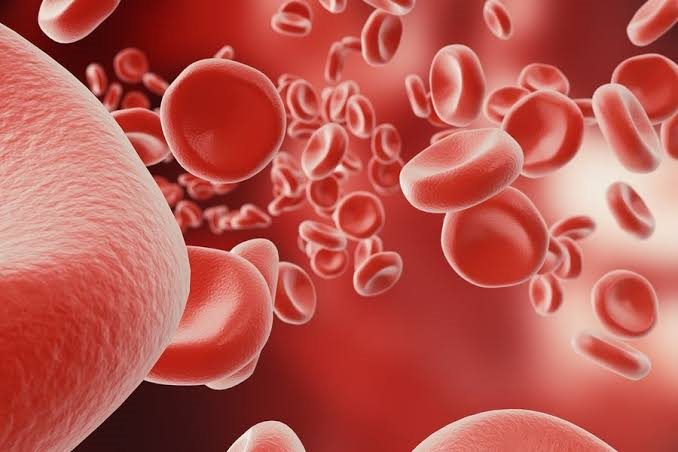
Haemoglobin is the protein in red blood cells that carries oxygen throughout the body. A haemoglobin test is routinely included in blood investigations in primary care and hospitals.
Under the current WHO definition used in the study, anaemia is generally diagnosed when haemoglobin falls below 12 g/dL in women and 13 g/dL in men.
These cut-offs have remained largely unchanged for about five decades.
But the new findings suggest that the relationship between haemoglobin and health may be more gradual than a single cut-off indicates.
Dr Pierpaolo Pellicori, consultant cardiologist at Queen Elizabeth University Hospital and senior lecturer at the University of Glasgow, said the findings suggested that long-term health risks could not necessarily be captured by one diagnostic threshold.
“The current W.H.O. thresholds have served clinical practice for decades, but our findings suggest that the relationship between haemoglobin concentration and long-term health is more nuanced than a single diagnostic cut-off can capture. Whether this should influence clinical practice is an important question for future research,” he said.
Why mild anaemia matters
Anaemia is common and can have several causes. Iron deficiency is among the most frequent, while vitamin B12 or folate deficiency, chronic inflammation and conditions affecting blood-cell production can also contribute.
Iron deficiency may result from inadequate dietary intake, impaired absorption or blood loss. In some cases, persistent blood loss can be linked to conditions such as ulcers or cancers of the gastrointestinal or urinary tract.
This makes a low or falling haemoglobin level potentially important even when it does not meet the formal definition of anaemia.
Professor John Cleland, professor of cardiology and senior author of the study, said mild cases may not always receive adequate attention.
“The most important purpose of clinical diagnostic criteria is to inform the management of patients. Currently, many clinicians do not even recognise a person has anaemia until its moderately severe, for example less than 11 g/dL. Showing that borderline anaemia is associated with increased risk and a high prevalence of iron deficiency should encourage investigation and treatment of a broad range of patients with mild/borderline anaemia,” he said.
For patients, however, the findings do not mean that everyone with a haemoglobin level close to the lower end of the normal range needs treatment.
The researchers specifically caution that their study establishes an association, not cause and effect. It does not show that raising haemoglobin in people with borderline-low levels would reduce their risk of death.
India has a larger anaemia burden
The findings could be particularly relevant to countries such as India, where anaemia remains a major public-health concern. But the UK study should not be directly extrapolated to the Indian population because its participants came from the UK Biobank and population characteristics, nutrition, disease patterns and healthcare access can differ.
For Indian patients, a haemoglobin result therefore needs to be interpreted alongside factors such as age, sex, diet, menstrual or other blood loss, nutritional deficiencies, chronic diseases and other laboratory findings.
A mildly low haemoglobin level can sometimes be the first clue to an underlying condition. Treating the number alone, without identifying the cause, may therefore miss the larger problem.
The study also highlights a broader issue in medicine: diagnostic cut-offs are useful for clinical decision-making, but biological risk does not always change abruptly at a particular number.
Professor Paul Welsh, professor of molecular epidemiology and director of the Glasgow Biomarker Research Unit at the University of Glasgow, said the size and duration of the study strengthened the findings, but its observational nature remained an important limitation.
“The very large study population, long follow-up and consistency across several statistical approaches make this a robust association. However, this remains an observational study. The next question is whether low-normal haemoglobin can help identify treatable underlying conditions and improve patient care,” he said.
The researchers said further studies are needed to determine whether people with borderline-low haemoglobin benefit from additional investigation or treatment.
For now, the message is less about changing the definition of anaemia and more about looking beyond a single number. A haemoglobin value that falls just within the accepted range may still warrant attention when accompanied by symptoms, risk factors or other abnormal findings.