NEW DELHI: India has developed its first indigenous vaccine against the highly pathogenic H5N1 bird flu virus, a development expected to strengthen disease control in the poultry sector, protect farmers’ livelihoods and reduce economic losses from recurring outbreaks.
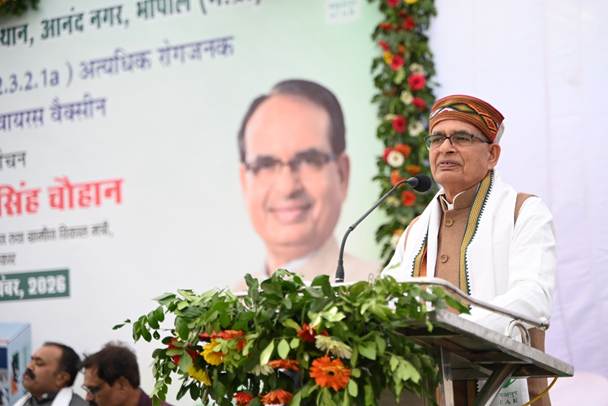
Union Agriculture Minister Shivraj Singh Chouhan on Friday dedicated the vaccine, developed by scientists at the ICAR-National Institute of High Security Animal Diseases (NIHSAD), Bhopal, to the nation. Priced at Rs 1-2 per dose, the vaccine is being projected by the government as an affordable tool for poultry farmers, including those operating small farms.
The development assumes significance as India has reported more than 500 bird flu outbreaks since 2006. The disease can cause large-scale mortality among poultry, trigger culling of birds to contain infection and disrupt the livelihoods of farmers and businesses dependent on the poultry industry. It can also infect mammals and, in certain circumstances, pose a risk to humans.
India’s first reported outbreak occurred in Navapur, Maharashtra, in 2006, when around 10 lakh chickens died. Subsequent outbreaks have also resulted in substantial losses, including the death of around nine lakh chickens in 2021 and another two lakh this year, according to figures shared by the minister.
The low-cost vaccine is expected to make preventive vaccination more accessible and reduce the vulnerability of poultry farms to future outbreaks. However, its impact will depend on its deployment, vaccination coverage and integration with existing disease surveillance and outbreak-control measures.
Announcing the vaccine at an event in Bhopal, Chouhan also said a state-of-the-art animal disease research laboratory would be established in the city at an estimated cost of Rs 300 crore. He credited scientists at NIHSAD for developing the vaccine after months of research under stringent biosafety conditions.
The development also highlights the growing economic importance of animal health. Describing livestock as a regular source of income for rural households, Chouhan said animal husbandry contributes around 14% to India’s GDP, while poultry accounts for another 1%.
He cited annual economic losses of around Rs 22,000 crore from Foot and Mouth Disease, Rs 20,000 crore from Lumpy Skin Disease, Rs 9,212 crore from Brucellosis and Rs 4,683 crore from Peste des Petits Ruminants, taking the combined burden of these diseases to nearly Rs 56,000 crore.
The government has been expanding vaccination programmes to control livestock diseases. Under the National Animal Disease Control Programme, 147.16 crore vaccine doses have been administered against Foot and Mouth Disease, the minister said.
The 2022 Lumpy Skin Disease outbreak, which affected 32.8 lakh animals and claimed 1.86 lakh lives, also highlighted the need for indigenous disease-control solutions. Scientists subsequently developed the Lumpi-ProVacInd vaccine to combat the infection.
NIHSAD has earlier developed vaccines for diseases including Gumboro, Brucella abortus S-19 Delta, Classical Swine Fever and African Swine Fever. The H5N1 vaccine adds to its work in strengthening India’s animal disease research capabilities.
The research team included Dr S Nagarajan, Dr Manoj Kumar, Dr C Tosh, Dr H V Murugkar, Dr Aniket Sanyal, Dr Senthil Kumar D, Dr Naveen Kumar and Dr Yogisharadhya R.
Chouhan praised the scientists for working for months under strict biosafety protocols to complete the research. He said their efforts reflected the importance of strengthening indigenous scientific capabilities in animal health.
The Rs 300-crore laboratory planned in Bhopal is expected to further strengthen research and preparedness against emerging animal diseases, an area of growing importance for India’s poultry and livestock economy.