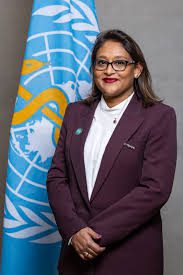
By Saima Wazed (Regional Director for WHO South-East Asia)
International Women’s Day, marked annually on 08 March, raises awareness of the issues impacting women all over the worldThis year’s theme, ‘For ALL women and girls: Rights. Equality. Empowerment’, calls for actions to unlock equal rights, power and opportunities for all women and girls, for a future where no one is left behind. Empowering youth, particularly young women and adolescent girls is central to this vision. This year also marks the thirtieth anniversary of the Beijing Declaration and Platform for Action – the most progressive and widely endorsed blueprint for women’s and girls’ rights worldwide.
In South-East Asia, we recognise that the growth and development of our societies is inextricably linked to the health and wellness of women. The second pillar of our Regional Roadmap for Results and Resilience calls for greater investment in women and girls, recognizing ‘historical discrimination’ and the greater individual and societal challenges faced by them. The Roadmap calls for ‘investment in, and working across, health-affecting sectors, such as education, water and sanitation, and pollution.’
In our South-East Asia region, the gender gap in women’s labor force participation has narrowed in most countries. In the past decades, total fertility rate has decreased for most of the countries in the region. Maternal mortality ratio (MMR) has also declined significantly – between 2010 to 2020, a 41% decline in the region versus a 12% decline globally.
In fact, our region is on track to achieve the SDG target on MMR by 2030. The 2024 WHO global survey report notes that all our countries in South-East Asia have national guidelines and policies on sexual and reproductive health, family planning and contraception, STI treatment and counselling among others. Gender and health is also integrated as a priority area of work in all the current WHO South-East Asia Region Country Cooperation Strategies with member states.
However, as far as we have come, we have to acknowledge our journey is far from over.
In our region, all countries rank high on the global Gender Inequality Index. Nearly 40% of women have experienced physical and/or sexual violence in their lifetime. This aggravates the risks of communicable diseases like HIV and STI, along with mental health challenges. During crisis and emergencies, women’s access to healthcare is often disrupted more than men due to various factors like mobility restrictions, and economic insecurity.
Approximately 60% of our countries live in rural areas, with a significant proportion being women. Rural areas face specific obstacles to accessing health services, including inadequate comprehensive services, insufficient health infrastructure, and a limited workforce. These issues are compounded for women, who face a layered disadvantage linked to gender, further exacerbated by socio-economic difficulties and cultural norms that restrict their access to healthcare.
To protect and promote the health of women and girls, WHO South-East Asia Region is deploying the ‘4P’ approach:
>Promote: Advocating for investment in women and girls across health and related sectors like education, water and sanitation etc.
>Provide: Prioritizing unmet health needs and addressing access related barriers for women and girls.
>Protect: Enhancing female representation in decision making to catalyze inclusive policy planning and preparedness.
>Power and perform: Identifying hotspots of health risks for women and girls for targeted action