New Delhi: It slips unnoticed into teenage years, then shadows adulthood — reshaping behaviour, trust, self-worth, and the very ability to stand steady in the world. What remains unhealed in the early years does not fade; it deepens — turning into a lifelong battle for balance and belonging.
Sounding a note of concern, Dr. Rajesh Sagar, senior psychiatrist at All Indian Institute of Medical Sciences (AIIMS) Delhi said that mental health among children and adolescents requires immediate national priority. Young Indians, he emphasised, are “minds in the making,” and the interventions of today — or the failure to offer them — shape who they become tomorrow.
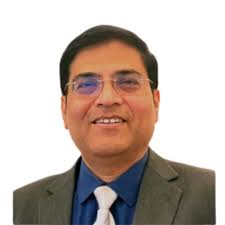
Studies reinforce the severity of the crisis. Dr Sagar cited research showing that over 50% of psychiatric illnesses seen in adults trace their origins to before the age of 14. The early years, he said, are not just academic years, but the foundation for emotional, behavioural and social stability. When that foundation cracks, its impact resurfaces later as anxiety, depression, substance use, self-harm, violent behaviour or lifelong insecurity.
India, with more than 40% of its population below 18, stands at a crossroads. Yet the country’s response remains inadequate. The treatment gap for child and adolescent mental disorders is estimated at 80–90% — meaning that only one or two in every ten children who require care are able to access it. “The rest fall through the system,” Dr. Sagar noted, adding that stigma, delayed recognition and limited specialised services keep families from seeking help.
Daily life for today’s young, he pointed out, is more demanding than ever — intensified academic pressure, digital overload, cyberbullying, shifting family structures, body-image insecurity and strained relationships.
A generation, he observed, is growing up “overstimulated yet emotionally undernourished,” with distress too often dismissed as “phase hai”, “drama” or “attention-seeking” instead of recognised as a cry for help.
Warning signs, he said, appear quietly — withdrawal, irritability, aggression, falling grades, sleep disturbance, physical complaints without cause, or sudden appetite changes. Thoughts of self-harm must never be brushed aside. “It is distress — immediate, urgent and real,” he said.
Preventive habits can offer protection, he added — adequate sleep, physical activity, creative engagement and balanced nutrition. However, exam seasons often reverse these, pushing children towards sleepless nights, junk food and caffeine, heightening anxiety and mood instability.
Government interventions such as RBSK, RKSK, the School Wellness Programme, and the National Education Policy recognise the issue, but their implementation remains uneven for a population of this scale, noted the doctor. Strengthening institutions, counsellor availability, teacher sensitisation, helplines, and parent-school cooperation, he said, are critical.
Dr Sagar also cautioned against the rising tide of cyberbullying and screen-dependency. Many parents, he said, do not recognise how deeply online humiliation or exclusion can damage a child’s emerging identity — scars often carried into adulthood.
On the role of schools, he noted that teachers are often the first to notice change.
“They are more neutral,” he said. “A parent may insist my child cannot be like this, but a teacher observing 30 or 50 students knows when one diverges.” Often, he added, it is the teacher who refers a child first.
Parent-teacher meetings, he stressed, should evolve beyond academic reports.
“It should also be about behaviour — how a child interacts with peers and teachers,” he said.
Studies over the past decade too resonates with Dr Sagar’s observation. Research published in The Lancet Psychiatry has linked adverse childhood experiences (ACE) to anxiety, depression and substance dependence later in life, while a 2023 UNICEF report found that children exposed to trauma are three times more likely to develop chronic mental-health conditions as adults. The brain, still forming in the early years, learns survival before safety — and carries that script forward, said the report.