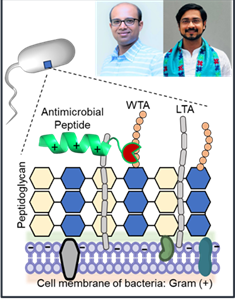
New Delhi: Researchers at IIT Ropar have developed a breakthrough diagnostic method that can identify disease-causing bacteria far more quickly and accurately, potentially transforming infection diagnosis and treatment. The study, published in Nature Communications, introduces “boronopeptides”—engineered molecules that detect harmful bacteria with nearly 40 times higher accuracy than current techniques.
Diagnosing bacterial infections remains challenging as many illnesses share similar symptoms, while conventional lab tests often take hours or days. These delays force doctors to rely on broad-spectrum antibiotics, risking poorer outcomes and accelerating antimicrobial resistance.
“Our biggest challenge is the time gap between collecting samples and getting definitive results,” said Dr Anupam Bandyopadhyay of IIT Ropar’s Department of Chemistry. “By the time the pathogen is identified, crucial treatment time is already lost.”
To overcome this, the team modified naturally occurring antimicrobial peptides by adding boron, creating boronopeptides with a boronic acid component. This allows the molecules to selectively bind to lipoteichoic acid, a key structural marker found on Gram-positive bacteria—responsible for many hospital and community infections.
In lab studies, the boronopeptides showed exceptional precision, clearly distinguishing harmful bacteria from healthy human cells. They also enabled high-quality bacterial imaging using extremely small amounts of detection agents, making the approach both effective and cost-efficient.
Another major advantage is scalability. The boronopeptides can be synthesised through a simple chemical process that does not require advanced equipment, opening the door for use in smaller hospitals and resource-limited laboratories.
While boronic acid-based antibacterial materials have been studied before, this research is the first to clearly explain how they specifically target lipoteichoic acid. This insight paves the way for next-generation diagnostic tools.
The researchers are now exploring how the technology could help tackle antimicrobial resistance by enabling faster, targeted treatment decisions. If successfully adopted in clinical settings, the innovation could significantly improve infection management, patient outcomes, and antibiotic stewardship.
Ends