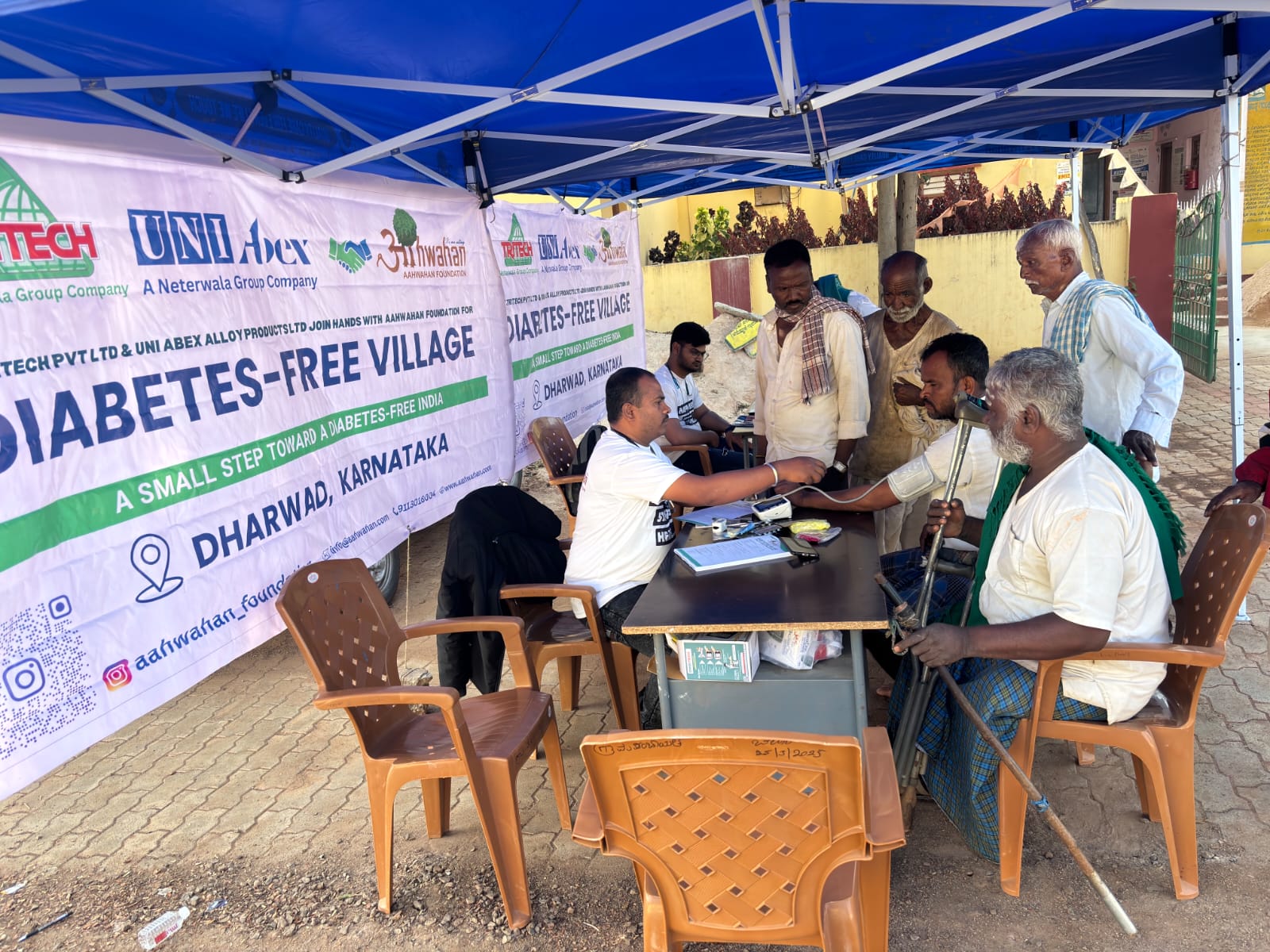
Dharwad: At a time when India is grappling with a growing diabetes burden, a voluntary organisation Aahwahan Foundation has announced the launch of what it described as the country’s first “Diabetic-Free Village Initiative” in Dharwad district of Karnataka.
The much-needed grassroots intervention aims at prevention and early detection of the chronic disease in rural areas. The programme, which seeks to strengthen preventive healthcare in underserved regions, is being rolled out in 14 villages across Karnataka and Maharashtra in its first phase.
Of these, eight villages — Kottur, Mummigati, Belur, Venkatpur, Tegur, Niralakatti, Chikkamalligawad and Hiremalligawad — are located in Dharwad district, while six are in Nashik district of Maharashtra. The combined population of the eight villages in Dharwad is 26,580. According to the Foundation, 6,210 individuals have so far been covered under diabetes screening, health awareness campaigns and lifestyle counselling.
India is home to one of the world’s largest populations of people living with diabetes, with rural communities increasingly affected due to changing food habits, sedentary lifestyles and limited access to early diagnosis. Public health experts have repeatedly stressed the need for decentralised, community-level interventions to address the silent progression of the disease.
The initiative focuses on free weekly screenings, blood sugar testing, distribution of medicines and awareness sessions conducted within the villages. The Foundation has deployed medical teams to conduct regular check-ups and provide test reports, besides offering nutrition guidance and counselling on lifestyle modifications.
Speaking at the launch, Braja Kishore Pradhan, Founder of Aahwahan Foundation, said the idea emerged from visits to the villages in Dharwad. “Many families were unable to travel repeatedly to the city for treatment due to financial hardship. Diabetes was going unmanaged because preventive care was not reaching them. It became essential to take healthcare services directly to the villages,” he said.
Under the programme, beneficiaries are categorised into three groups based on screening results: borderline individuals, high-risk individuals and those already diagnosed with diabetes. Tailored interventions are then provided to each group, including medication, monitoring and lifestyle advice.
The Foundation is also distributing diabetes kits containing glucometers and essential medicines to help patients monitor blood sugar levels at home. Weekly follow-ups are conducted to ensure adherence to treatment and reinforce dietary and behavioural changes.
Sameer Gowda, a farmer from one of the participating villages, said the initiative had eased both financial and logistical burdens. “Travelling to the city for treatment was expensive and exhausting. Many times I had to skip check-ups. Now the medical team visits our village every week. I have been given a testing kit and medicines on time. I feel more secure about my health,” he said.
The Foundation said the larger goal is to reduce long-term complications by identifying cases early and encouraging sustained lifestyle changes. By emphasising prevention and regular monitoring, the initiative aims to lower the economic burden on families while improving quality of life in rural communities.
India ranks second worldwide with over 101 million people living with diabetes and another 136 million prediabetic as of 2023. Type 2 diabetes accounts for most cases, leading to significant cardiovascular and renal complications.