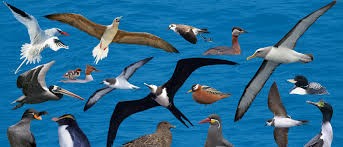
NEW DELHI: In a breakthrough that could reshape how scientists track ocean pollution, seabirds have emerged as unlikely but powerful sentinels of mercury contamination across the world’s oceans. An international study led by researchers from Japan has, for the first time, used biological data—drawn from blood samples of seabirds—to map the global distribution of mercury in marine ecosystems.
The analysis, based on more than 11,215 seabirds across 108 species, offers a striking new perspective on how this toxic metal travels, accumulates, and impacts ocean life. Traditionally, mercury distribution in oceans has been estimated using complex simulation models. However, this study, published in Science of the Total Environment, flips that approach by relying on empirical evidence from living organisms—making it the first biologically grounded global estimate of oceanic mercury.
The researchers analysed mercury levels in seabird blood collected between 2017 and 2024 from breeding sites in Japan, Alaska, and New Zealand. These were combined with data from over 100 previous studies conducted between 1980 and 2025. The result is one of the most comprehensive datasets of its kind, capturing contamination patterns across diverse ocean regions and ecological niches.
What makes seabirds particularly valuable in such studies is their feeding behaviour. As top predators, they consume fish and zooplankton that have already accumulated mercury through the food chain. This process, known as bioaccumulation, results in higher concentrations of mercury in seabird tissues—effectively turning them into living indicators of ocean health.
Moreover, blood samples taken during breeding seasons reflect the birds’ recent diet, offering a precise snapshot of mercury exposure in specific ocean zones over a defined time frame. One of the most striking findings of the study is the clear pattern in mercury exposure.
Seabirds feeding higher up the food chain—especially those consuming prey from depths of 200 to 1,000 metres—showed significantly higher mercury levels. Larger birds with greater body mass also tended to accumulate more mercury. Among species, albatrosses and shearwaters were found to be particularly vulnerable, reflecting their long-distance foraging habits and reliance on deeper, mercury-rich food sources.
“These birds are effectively integrating signals from across the marine ecosystem,” the researchers noted, underscoring their role as bio-indicators. The study also revealed distinct regional variations—some expected, others surprising.
Higher mercury concentrations were recorded in the North Atlantic, North Pacific, and parts of the South Pacific below 40 degrees south. These regions, often associated with industrial activity and atmospheric pollution, appear to act as major sinks for mercury deposition.
Equally intriguing was the finding that areas with low biological productivity—indicated by lower chlorophyll levels—tended to have higher mercury concentrations. This suggests that less productive waters may allow mercury to persist longer in the ecosystem. In contrast, relatively lower levels were observed in the South Atlantic and Southern Oceans, pointing to regional differences in pollution dynamics.
Mercury pollution in oceans is largely a legacy of human activity. Since the Industrial Revolution, emissions—primarily from coal combustion—have surged, releasing mercury into the atmosphere. Carried by winds across continents, it eventually settles into oceans through rainfall.
Once in the marine environment, mercury can transform into highly toxic forms that move up the food chain, ultimately reaching predators like seabirds—and, by extension, humans who consume seafood. Perhaps the most consequential finding is that seabird-based estimates showed only weak correlation with traditional simulation models.
“The seabird model is based on real biological measurements and may therefore offer a more reliable picture than theoretical simulations,” the researchers said. This divergence raises important questions about the accuracy of current models used to guide global environmental policy.
The study’s findings come at a critical time, as countries work to curb mercury emissions under international agreements such as the Minamata Convention. By offering a real-world, biologically grounded monitoring tool, seabirds could help verify whether such efforts are translating into measurable improvements in ocean health.
More broadly, the research underscores a powerful idea: that nature itself can serve as a diagnostic tool—if we learn how to read its signals.
#seabirds #pollution #seapollution #mercury #study #researchers #marine #marineenvironment #environment
For any query, kindly contact indiahealthbuddy@gmail.com