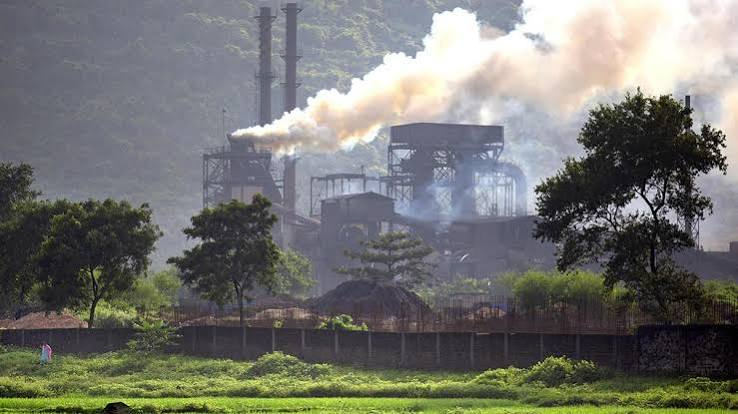
NEW DELHI: India’s rapid economic growth has brought millions of households access to electricity and cleaner cooking fuels, but the country’s growing dependence on coal-fired power has come with a significant public health cost, a new study has said.
The study, led by researchers at the University of Oxford and published in Nature Cities, highlights a widening contrast in India’s energy transition: While cleaner cooking has helped reduce household air pollution, rising electricity demand met largely by coal has contributed to worsening outdoor air pollution and an increase in deaths linked to fine particulate matter (PM2.5).
Between 2000 and 2020, India’s electricity demand increased nearly fourfold, from around 450 terawatt-hours (TWh) to almost 2,000 TWh. Coal supplied 76% of this demand, driving up sulphur dioxide (SO₂) emissions, which contribute to the formation of sulphate aerosols and fine particles in the atmosphere, said the researchers.
They estimated that urban deaths attributable to PM2.5 exposure rose from around 6.7 lakh in 2000 to 8.7 lakh in 2020, an increase of about 30%. The estimated contribution of power-sector emissions to these deaths increased particularly sharply, from around 15,000 to nearly 3 lakh over the same period.
The study ‘‘Economic boom-driven electricity demand linked to urban air pollution and health in India’ points to the health implications of an energy transition in which rising demand for electricity has continued to rely heavily on fossil fuels.
“This is not simply a story of development making pollution worse. Rising incomes have enabled a major transition towards cleaner household energy, with important health benefits. The challenge is to ensure that the electricity supporting those gains is itself generated more cleanly,” said lead researcher Dr Basudev Swain, who was at Oxford’s Department of Physics during the study and is now at Goethe University Frankfurt, Germany.
The study found that the power sector’s contribution to urban airborne particle pollution increased from around 16% in 2000 to 36% in 2020, making it the largest human-caused contributor in the researchers’ analysis. Industry accounted for about 32% in 2020, underlining that coal-fired power is a major contributor but not the only source of pollution.
The impact was particularly pronounced across northern and eastern India, including the densely populated Indo-Gangetic Plain, where large populations live alongside extensive coal-fired power infrastructure.
The researchers combined satellite observations, atmospheric analysis, chemical transport modelling, energy and socioeconomic data, and population and mortality estimates to examine the relationship between economic growth, electricity generation, pollution and health.
The study also highlights the other side of India’s energy transition. Access to cleaner cooking fuels and technologies increased from around 25% of the population in 2000 to nearly 75% by 2023. Over a similar period, deaths attributable to household air pollution declined from approximately 12.5–13 lakh annually around 2010 to about 10 lakh in 2023, according to independent health datasets cited in the study.
This shift has helped reduce exposure to smoke inside homes, particularly as households move away from more polluting cooking fuels. However, the findings suggest that improvements in household air quality need to be accompanied by cleaner electricity generation if the overall health benefits of development are to be sustained.
Co-author Dr Rui Song of Oxford’s Department of Physics said the findings had implications beyond India, highlighting how rapidly rising electricity demand and energy-security concerns can prolong dependence on coal.
“Coal-fired power not only worsens air quality and harms public health; its aerosol emissions can also reduce solar power output, directly weakening the clean energy transition,” Song said.
The researchers’ findings bring attention to the importance of reducing emissions from electricity generation alongside efforts to expand renewable energy and improve air quality.
The study suggests that cleaner household energy and economic progress alone cannot deliver lasting improvements in air quality unless the electricity powering that progress also becomes cleaner.