NEW DELHI: More than 30 years after the enactment of the law banning sex selection, India’s efforts to address gender imbalance continue to face challenges, with the Centre now emphasising technology-driven monitoring, stricter inspections and better coordination among states to prevent misuse of prenatal diagnostic facilities.
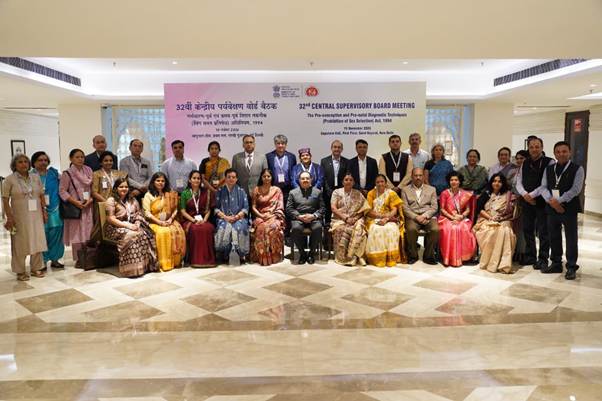
At the 32nd meeting of the Central Supervisory Board, Union Health Minister Jagat Prakash Nadda reviewed the implementation of the Pre-Conception and Pre-Natal Diagnostic Techniques (Prohibition of Sex Selection) Act, 1994, and urged states to strengthen enforcement in response to emerging technological challenges.
According to the Sample Registration System (SRS) 2024 report, India’s sex ratio at birth stood at 918 girls per 1,000 boys during 2022-24, compared with 917 in 2021-23. The marginal improvement, however, conceals significant regional differences. Uttarakhand recorded 872 girls per 1,000 boys, while the figures for Chhattisgarh and Kerala were 978 and 974, respectively.
Nadda stressed the importance of conducting periodic inspections of registered diagnostic centres and taking timely action against those violating the law. He also called for greater coordination among central and state authorities, regulators and enforcement agencies to improve compliance.
“Technology must be leveraged to advance healthcare and social inclusion, and must not be allowed to facilitate sex selection or gender discrimination,” he said.
The board also deliberated on expanding digital monitoring systems, strengthening the capacity of regulatory authorities, involving medical professionals and improving coordination between states.
Minister of State for Health and Family Welfare Anupriya Patel said tackling gender imbalance required addressing deep-rooted social attitudes. She emphasised education and behavioural change, highlighting women-led development as an important priority.
Union Minister of State for Women and Child Development Savitri Thakur underlined the contribution of the Beti Bachao Beti Padhao programme towards changing perceptions about the girl child. She called for continued public awareness campaigns and greater community involvement.
Health Secretary Punya Salila Srivastava stressed the need for joint efforts by the Centre and state governments, supported by digital interventions to improve oversight. She also highlighted the importance of working closely with medical professionals to protect the rights of the girl child.
A health official from the Ministry said that improving awareness among pregnant women, families and healthcare professionals, while promoting equal value for girls, remains an important part of the response to gender discrimination.