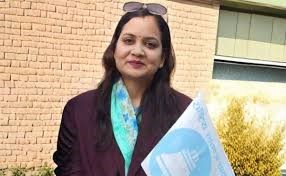
New Delhi: In a development that has drawn attention across the medical fraternity, Nisha Mehta, a former nurse UG trained at All India Institute of Medical Sciences (AIIMS), Delhi and then PG from Jiwaji University in Gwalior, Madhya Pradesh has risen to lead Nepal’s health system as its Health Minister—marking a rare and inspiring transition from bedside care to policymaking at the highest level.
For many at AIIMS, Delhi her elevation is both a moment of pride and a testament to the institution’s legacy of producing not just skilled clinicians but also leaders in public health.
“Her journey from the wards of AIIMS to a position of national responsibility is deeply inspiring. It reflects the strength of training and commitment to patient care that defines our institution,” the AIIM said in an official statement.
AIIMS noted that her achievements underscore the critical role of nurses in healthcare delivery and leadership.
Her journey, spanning clinical service, public health engagement and now political leadership, reflects the evolving role of healthcare professionals in shaping health systems beyond hospital walls.
During her time at AIIMS, colleagues recalled that she was a dedicated and compassionate professional, known for her commitment to patient welfare and her ability to handle high-pressure situations with calm efficiency. They agreed that her educational step at AIIMS became one of the most important parts of her life, because it helped her gain advanced knowledge and a stronger sense of responsibility. After finishing her studies, she returned to Nepal and worked for one year at Birat Teaching Hospital in Biratnagar.
Her appointment comes at a crucial time for Nepal, which continues to navigate multiple public health challenges, including improving healthcare infrastructure, expanding coverage and managing the rising burden of non-communicable diseases. The country’s health system, like many in the region, is undergoing a transition that demands both administrative acumen and ground-level understanding, said health experts.
Health activists believe that Mehta’s clinical background could prove to be a significant advantage. “Leaders with hands-on experience in patient care are often better equipped to design policies that are practical, responsive and aligned with on-the-ground realities,” said Rahat Kapoor, a Delhi-based health activist for elderly people.
“Nisha Mehta’s journey is truly commendable. What she has achieved is not just a personal milestone, but an inspiration for the entire nursing community. It shows that with the right opportunities, dedication and intent, nurses too can rise to positions of leadership and bring meaningful change.”
Her journey also highlights a larger message—that leadership and capability are not limited to any one profession. It is not only doctors who can shape healthcare policy; nurses, with their deep grassroots experience, have immense potential to lead and transform systems, she added.
Nurses in India, comprising roughly 47% of the health workforce, are vital to healthcare, providing 80% of patient contact, including direct care, medication management, and patient education. They act as a bridge between patients and doctors, operating in both high-level hospitals and, increasingly, in critical roles within rural “Health and Wellness Centres”.
#nurisng #health #AIIMS #delhi #gwalior #nepal #nepalgovernment
For any query, contact indiahealthbuddy@gmail.com