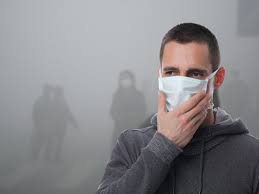
New Delhi: A recent survey by citizen platform LocalCircles has found that three out of four households report at least one member experiencing flu- or viral-like symptoms, indicating that the toxic haze blanketing the Delhi-NCR region is once again taking a severe toll on public health.
Hospitals too are witnessing a sharp rise in cases of throat irritation, wheezing, chest tightness, and worsening of chronic respiratory conditions or COPD. It is a progressive lung disease that makes it difficult to breathe due to obstruction of airflow, commonly caused by smoking, air pollution, or long-term exposure to irritants.
“Delhi represents the sharp edge of India’s air-pollution emergency,” said Dr. Rakesh K Chawla, HOD, Department of Respiratory Medicine, Jaipur Golden Hospital, Rohini, and Senior Consultant, Saroj Hospital. “Each winter, particulate-matter levels soar to nearly ten times the WHO safe limit. After Diwali and crop-residue burning, the city sits under a lid of stagnant cold air that traps toxins. This is not merely a seasonal inconvenience; it is a continuous assault on the lungs that weakens immunity, worsens asthma, and accelerates chronic lung disease. Clean air must be treated as a basic right, not a seasonal luxury.”
Dr. Chawla added that short-term interventions have failed to deliver real relief. “From odd-even traffic schemes to cloud-seeding experiments, these are reactive, symbolic measures. What Delhi needs is sustained enforcement of emission norms, investment in electric public transport, and strict controls on construction and waste burning. Without systemic change, every winter will replay the same public-health disaster.”
Air pollution now costs India an estimated 9.5% of GDP through healthcare and productivity losses. The medical community links this directly to the rising prevalence of Chronic Obstructive Pulmonary Disease (COPD) — a progressive condition whose cases doubled from 28 million in 1990 to 55 million by 2016.
“Even in already polluted environments, smoking multiplies the risk of COPD,” said Dr Aditya K Chawla, Consultant, Jaipur Golden Hospital and Saroj Hospital.
“No drug can restore lung function once it is lost. Prevention remains the only effective defence: quit smoking, limit outdoor exposure on high-pollution days, and switch to clean fuels at home. Public awareness, early screening, and long-term policy enforcement are key to protecting respiratory health.”
As Delhi’s air again slips into the “severe” zone, doctors warn that without coordinated government and citizen action, the capital’s annual winter smog will continue to erode health and economic productivity, turning the right to breathe clean air into an unrealised promise.
The newly released State of Global Air 2025 report highlights that India recorded over two million deaths in 2023 linked to air pollution, with PM2.5 concentrations in South Asia among the highest globally.
Pollution in India stems from multiple sources such as residential solid-fuel burning accounts for about 30% of ambient PM2.5, while vehicles, coal-fired power plants, industrial emissions, and crop-residue burning add further burdens. In cities like Delhi, traffic congestion and construction dust amplify exposure, say health experts.