New Delhi: With doctors across the country burdened by long hours of continuous patient care, leaving little time for research and teaching, Defence Minister Rajnath Singh on Monday called for a better balance between clinical duties and academic pursuits. He said reducing this imbalance is essential to strengthen India’s healthcare system and prepare it for future challenges.
Addressing a gathering in the Capital, Mr. Singh stressed that medical professionals often remain tied to patient care, limiting their ability to engage in innovation, training and research. He urged authorities to explore ways to support doctors so that they can contribute more effectively to knowledge creation and skill development.
Linking healthcare with national priorities, the Minister said health security is as important as border security. “When soldiers are assured of strong medical support, they perform their duties with greater confidence,” he said, underlining the role of a robust healthcare system in ensuring operational readiness.
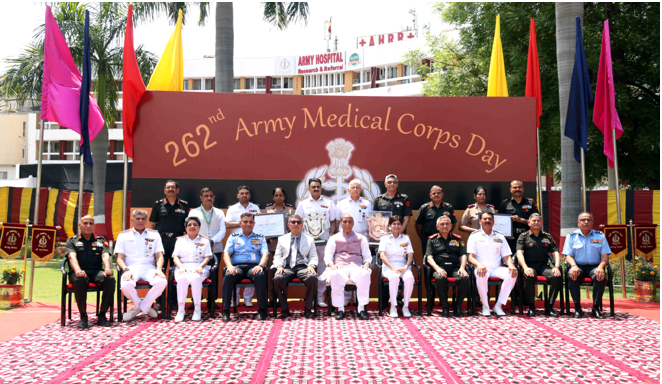
Singh was speaking after laying the foundation stone for new speciality centres in ophthalmology, oncology and joint replacement at the Army Hospital (Research & Referral), and inaugurating upgraded infrastructure at the Base Hospital, marking the 262nd Raising Day of the Army Medical Corps. 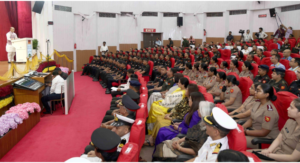
The new centres are expected to strengthen advanced medical care under the Armed Forces Medical Services, particularly in cancer treatment, eye care and complex surgeries. The upgraded Base Hospital, with a capacity of 998 beds and an additional 100 crisis expansion beds, will enhance both routine and emergency medical response for defence personnel.
Emphasising the need to keep pace with evolving challenges, Singh called for greater investment in innovation, research and modern technologies. While India has made progress in expanding healthcare access and infrastructure, he said more effort is needed in advanced areas such as early disease detection, personalised medicine, cardiovascular risk prediction and neuro-research related to mental health.
He also highlighted the importance of self-reliance in pharmaceuticals. Despite being a major global supplier of medicines, India continues to depend on external sources for high-end drug innovation. The Minister called for a shift towards an innovation-driven ecosystem, supported by start-ups, MSMEs and stronger clinical research frameworks.
On clinical trials, Singh noted that in many developed countries, industry-supported trials play a key role in advancing treatment. He called for reforms in India’s clinical trial ecosystem and urged the Armed Forces Medical Services to contribute actively to research that generates new medical knowledge, in addition to providing clinical care.
He also emphasised the need for standardised treatment protocols and improved knowledge-sharing across institutions. Creating a national-level data pool, he said, would help enable evidence-based treatment, strengthen policymaking and allow successful practices to be replicated more widely.
Suggesting ways to improve healthcare access for armed forces personnel, Singh proposed upgrading existing Command and Base Hospitals across regions to match the standards of premier institutions, rather than relying only on new projects.
The Minister also acknowledged the role of the Military Nursing Service, describing it as the backbone of military healthcare, and noted that granting ex-servicemen status to retired nurses reflects recognition of their contribution.
During the visit, he reviewed a technology exhibition showcasing advances in trauma care, battlefield evacuation, prosthetics, telemedicine and critical care, highlighting ongoing efforts to modernise military healthcare.
Awards for excellence were also presented, with Command Hospital (Southern Command) receiving the top honour and INHS Asvini being named second best hospital.
Singh also released a book titled ‘Precision Protocols in Early Neurodevelopmental Intervention’, a significant academic contribution aimed at standardising and improving early diagnosis and intervention strategies for neurodevelopmental conditions.
Chief of Defence Staff General Anil Chauhan, Chief of the Naval Staff Admiral Dinesh K Tripathi, Chief of the Army Staff General Upendra Dwivedi, Defence Secretary Rajesh Kumar Singh, DG AFMS Surgeon Vice Admiral Arti Sarin, Vice Chief of the Air Staff Air Marshal Nagesh Kapoor, and other senior officers also attended the event.
#army #defence #naval #afms #surgeon #rajnathsingh #doctors
For further query, contact indiahealthbuddy@gmail.com