MANDWA-ALIBAG (Raigad): As climate change and declining fish catch continue to strain coastal livelihoods in Maharashtra, fishing communities in Raigad district are turning to an alternative source of income — seaweed cultivation.
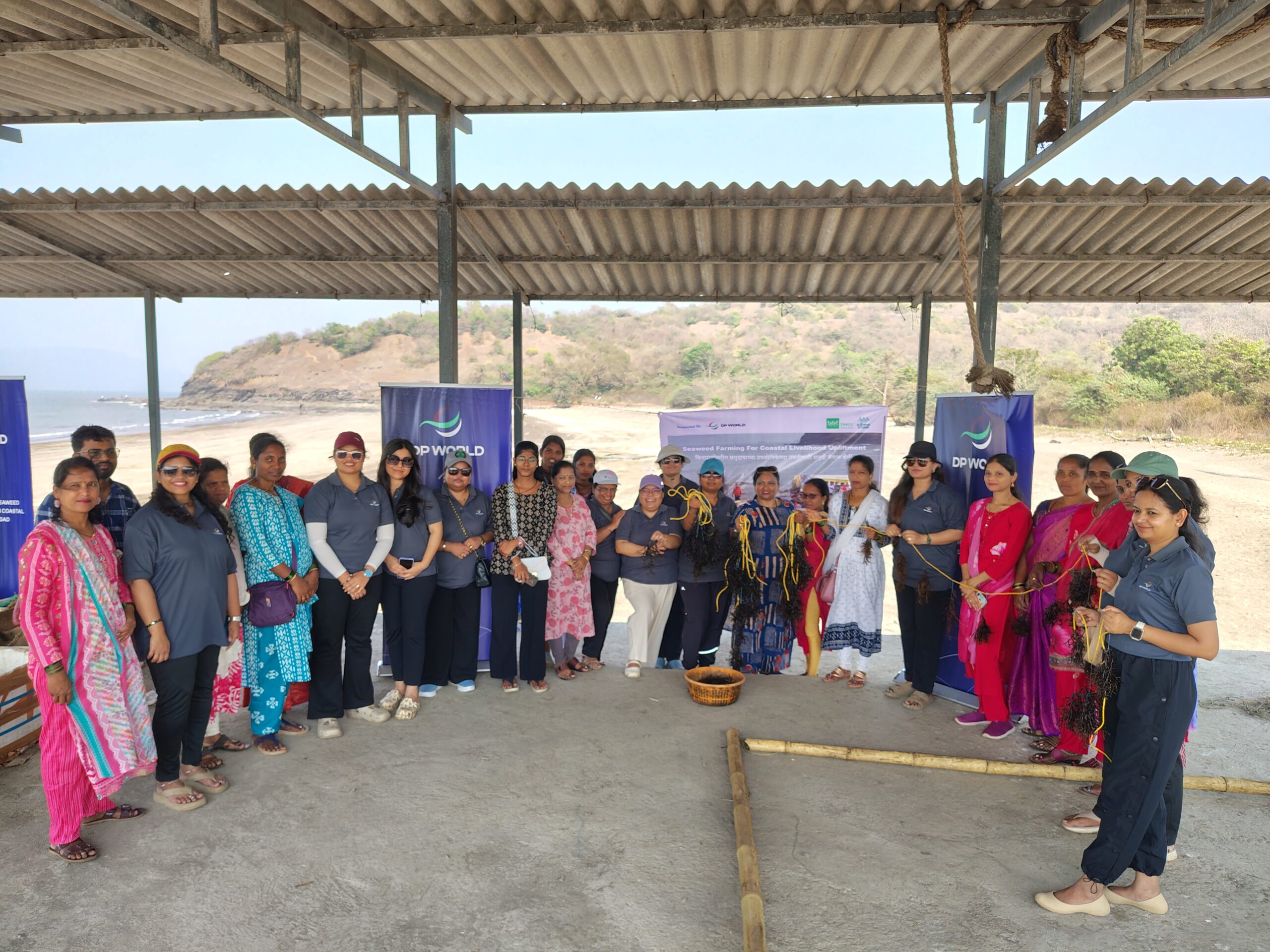
Along the Mandwa-Alibag coast, more than 250 seaweed cultivation units have been set up, offering new economic opportunities to fishing families while also supporting marine ecosystems.
The initiative is supported by global logistics company DP World in collaboration with the Indian Network on Ethics and Climate Change and ClimaCrew.
The programme is being implemented through DP World’s Marine Services arm, Shipping Solutions AMEA, and aims to help coastal communities cope with increasingly unpredictable fishing conditions. Seaweed farming requires no land or freshwater and can be harvested multiple times in a season, making it a practical and sustainable livelihood option.
The cultivation units act as artificial seaweed beds in the sea. Apart from producing biomass, these beds also function as natural biofilters, helping improve water quality. They create small habitats for marine species such as prawns, crabs and juvenile fish, thereby supporting biodiversity.
At present, the farms produce around 20 to 25 tonnes of wet seaweed per cycle. With more participation from local communities, production is expected to rise to 50–75 tonnes by the end of the season.
The initiative has seen active participation from fisher families and women-led self-help groups. For many households, seaweed farming provides an additional source of income at a time when traditional fishing is becoming less reliable. It also allows communities to remain connected to the marine environment that sustains them.
CM Muraleedharan, Regional Director – India, Shipping Solutions AMEA – Marine Services at DP World, said seaweed farming can strengthen resilience in coastal areas. “It offers a stable livelihood in the face of climate change. When communities are supported with sustainable solutions, they can build economic security while also protecting marine ecosystems,” he said.
Myron Mendes, Executive Director of INECC, pointed out that coastal communities are already experiencing the effects of climate change. “Declining fish catch, changing seasons and uncertainty in livelihoods are everyday realities. Seaweed farming offers a way to improve incomes while also supporting ocean health,” he said, adding that community-led efforts are key to building long-term resilience.
Devleena Bhattacharjee, Chief Operating Officer of ClimaCrew, said seaweed is among the most sustainable bio-resources. It can be grown without land or freshwater, processed into valuable products and is fully biodegradable. “It brings together environmental sustainability and economic benefit. For fisherfolk facing shrinking incomes, this can reduce the need to migrate to cities in search of work,” she said.
Globally, seaweed farming is gaining recognition as part of the emerging “blue economy”, which promotes sustainable use of ocean resources. Seaweed farms are known to absorb excess nutrients from water, improve water quality and support marine biodiversity.
For coastal communities in Raigad, the initiative represents more than just a new crop. It offers a practical response to climate challenges — one that supports both livelihoods and the health of the marine environment.