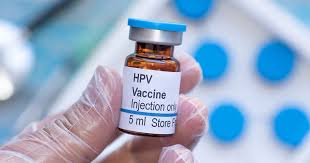
NEW DELHI: As India begins rolling out its national Human Papillomavirus infection (HPV) vaccination programme to prevent cervical cancer, a major global study has warned that poorer countries could witness a steep rise in cervical cancer cases and deaths in the coming decades if vaccination and screening efforts are not urgently expanded.
The study, published in The Lancet by researchers from Université Laval and the CHU de Québec – Université Laval Research Center, cautioned that inequalities in cervical cancer incidence between rich and poor nations could widen dramatically by the end of the century.
The warning comes at a significant moment for India, where the government has started introducing HPV vaccination for adolescent girls as part of a larger strategy to reduce the burden of cervical cancer — one of the most common cancers affecting women in the country.
Experts say the findings highlight the urgency of ensuring equitable vaccine coverage, especially in rural and underserved areas where awareness, organised screening and access to preventive healthcare remain limited.
According to the study, cervical cancer incidence in low-income countries is already nearly three times higher than in wealthier nations. If current vaccination trends continue without major expansion, this gap could widen to 12-fold by the end of the century.
“Compared to Canada, we’re even talking about 40 times higher,” said Marc Brisson, professor at Université Laval’s Faculty of Medicine and lead author of the study.
Researchers noted that while many high-income countries are steadily moving towards eliminating cervical cancer through widespread HPV vaccination and regular screening, several low- and middle-income countries continue to lag because of weak health systems, poor vaccine access and delayed diagnosis.
For India, which continues to contribute substantially to the global cervical cancer burden, the study is being viewed as an important public health warning.
The researchers evaluated whether countries are on track to meet the cervical cancer elimination targets outlined by the World Health Organization in 2020. Under the WHO strategy, elimination would mean reducing cervical cancer incidence to fewer than four cases per 100,000 women.
To achieve this, WHO has recommended vaccinating 90% of girls before the age of 15 years, screening 70% of women, and ensuring treatment for 90% of precancerous lesions and cervical cancer cases.
However, five years after the targets were announced, many countries with the highest disease burden still remain far from achieving them.
“High-income countries are on the path to elimination, but that is not the case for many low-income nations,” the researchers observed.
The study modelled several future scenarios, ranging from continuation of current vaccination rates to full implementation of WHO recommendations. It found that delays in introducing HPV vaccination and organised screening could have irreversible consequences.
“If we delay achieving WHO targets by even five years, hundreds of thousands of girls may become infected with HPV during that period, later developing cervical cancer and facing avoidable deaths,” the researchers warned.
The authors estimated that universal HPV vaccination for girls and boys, combined with catch-up immunisation campaigns and stronger screening systems, could prevent nearly 37 million cervical cancer cases globally by the end of the century.
In India, awareness around HPV vaccination has gradually improved in recent years, particularly in urban centres. However, coverage remains uneven across States, and many adolescent girls still remain outside organised immunisation programmes.
Several States have initiated pilot vaccination drives and awareness campaigns, but experts say social stigma, lack of awareness and poor healthcare access continue to hinder uptake.
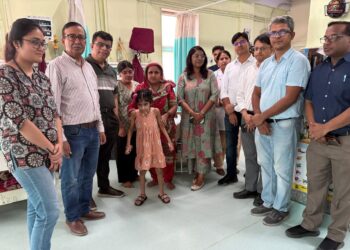
Talking to a group of journalists at an event organised by the Delhi Union of Journalists (DUJ) here Dr. Akansha Sinha, Senior Consultant in Preventive Oncology at the Delhi State Cancer Institute, Delhi said cervical cancer remains one of the few cancers that can largely be prevented through vaccination and early detection. Like many government hospitals, her institute is offering free vaccine.
She noted that while the government’s vaccination campaign is currently focused on adolescent girls around the age of 15, women up to 45 years of age may also opt for the vaccine after medical consultation.
Dr. Sinha also advocated extending vaccination to boys, noting that broader immunisation could help reduce HPV transmission within the population.
She pointed out that persistent stigma surrounding gynaecological screening, delayed healthcare-seeking behaviour among women, and poor awareness in rural communities continue to delay diagnosis and treatment.
#cervicalcancer #vaccination #oncology #india #cancer #Humanpapillomavirusinfection
For any query, contact indiahealthbuddy@gmail.com